
2026 Top Empty Container Types for Global Buyers
Global buyers entering 2026 need more than a low quotation for an empty container. They need equipment that matches cargo, route, handling method, and inspection requirements. A clean 20-foot dry container may suit cartons and machinery. A 40-foot high-cube unit offers extra vertical space for lightweight cargo. Open-top containers help with tall equipment, while flat racks support oversized industrial components. Reefer containers require stronger technical checks, even when they are empty.
“ The container is the basic unit of intermodal transportation, ” explains transport geographer Dr. Jean-Paul Rodrigue. This principle remains practical. A container must move smoothly between ships, trains, trucks, and storage yards. Its corner castings, locking bars, doors, floor, roof, and identification plate all deserve attention. Small details matter.
This guide examines the top empty container types for global buyers in 2026. It considers availability, dimensions, condition grades, CSC safety certification, repair history, and regional supply differences. Buyers should also confirm whether “wind and watertight” means recent inspection or only a seller’s description. That assumption fails sometimes. Prices may look attractive when the container has hidden floor damage, difficult doors, or long inland transport costs. A careful buyer photographs the unit, checks its number, verifies specifications, and records acceptance conditions. No category is perfect. The best choice depends on the cargo and destination, not fashion. Procurement teams should treat each empty container as working transport equipment, not merely as a steel box.
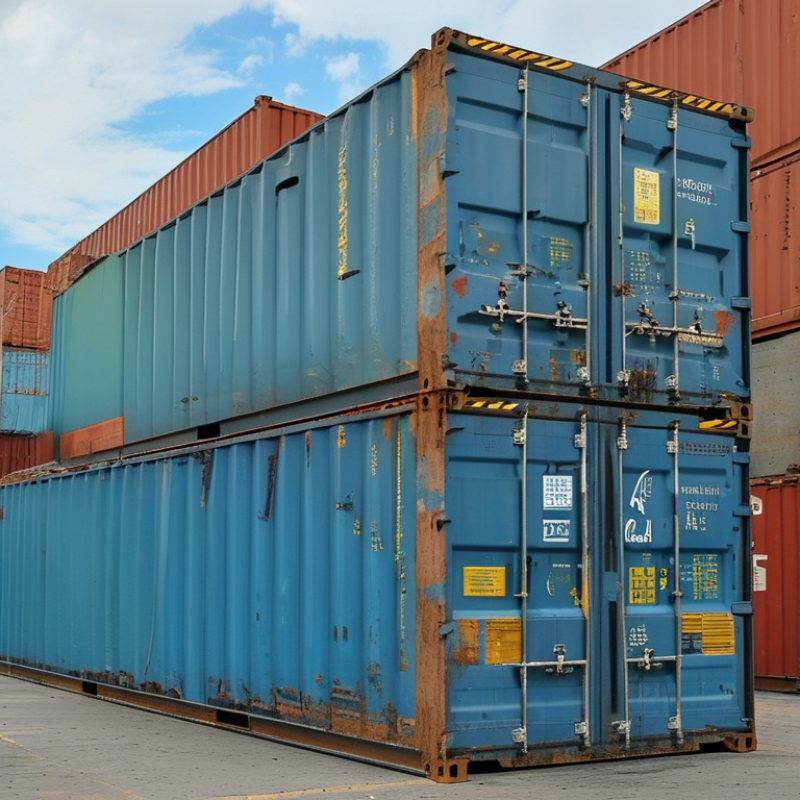
What Empty Containers Are and Why Global Buyers Need Them
Empty containers are cargo units without goods inside, but they are not “unused” equipment. A 20-foot dry container may move machinery, packaged materials, or seasonal inventory. A 40-foot high-cube offers extra height for bulky cargo. Refrigerated containers protect temperature-sensitive goods, while open-top and flat-rack types handle tall, wide, or heavy loads. Each type requires different inspections, handling methods, and transport planning.
The need is global and practical. UNCTAD’s Review of Maritime Transport 2024 reports that maritime shipping carries over 80% of world merchandise trade by volume. The same report records global container port throughput at roughly 858 million TEUs in 2023. Empty equipment supports this enormous network after import cargo is unloaded. Buyers use it for export preparation, inland storage, factory relocation, and temporary stock protection. A suitable empty container can reduce waiting time at a depot or port.
Small details matter. Check the container’s external dimensions, door seals, floor condition, ventilation, and visible corrosion. Verify the safety approval plate before loading. An empty box is not automatically ready for service. This is where buyers sometimes misjudge the market. The cheapest unit may need repairs, cleaning, or extra inland transport. Port congestion also changes availability quickly, as reflected in UNCTAD’s 2024 discussion of supply-chain disruption. Prices and supply can shift within days. Careful buyers compare total delivered cost, not only the quoted container price.
Standard Dry Containers for General Cargo and Everyday Shipping
Standard dry containers remain the practical choice for most global cargo movements. They protect cartons, furniture, machinery parts, and packaged goods from rain, dust, and handling damage. The common 20-foot container offers about 33 cubic meters of space. A 40-foot unit provides roughly 67 cubic meters. Actual capacity varies with wall thickness and interior design.
Good preparation matters. Inspect the floor for soft spots, loose boards, and strong odors. Check door seals, locking rods, corner posts, and roof panels before loading. A clean, dry interior reduces the risk of moisture damage. Pallets should fit without blocking the doors. Heavy cargo needs even weight distribution across the floor. I have seen rushed loading create preventable problems, especially when cartons were stacked too high. One overlooked detail can affect the whole shipment.
Tips: Match container length with cargo volume, not habit. Use desiccant bags for moisture-sensitive goods, but do not treat them as a replacement for proper packaging. Photograph the empty container before loading. Record dents, stains, and damaged flooring. Verify the safety plate and inspection status with the carrier or depot. Small checks feel slow. They often save time later.
Refrigerated Containers for Temperature-Sensitive Products
In 2026, refrigerated containers remain essential for temperature-sensitive products moving across long ocean routes. Common options include 20-foot and 40-foot units, with high-cube models offering extra internal height. Buyers should match container size with cargo volume, pallet dimensions, and loading access.
A reliable reefer needs more than a cold interior. During depot inspections, check the control panel, door seals, floor channels, drain openings, and power cable. The unit should complete a documented pre-trip inspection. Ask for temperature history and maintenance records. A calibrated data logger can reveal temperature swings that the display may hide. Small details matter.
Set the temperature according to the product specification, not personal preference. Leave clear airflow beneath pallets and in front of the return-air wall. Avoid blocking the evaporator area. Fresh cargo may need ventilation, while frozen cargo often requires stable circulation. Never load warm products into a container designed only to maintain temperature. Pre-cooling is usually handled before loading.
A perfect loading plan does not exist. Condensation, delays, and uneven pallet spacing can still create problems. I would also inspect the empty container after cleaning, because odors and moisture are easy to overlook. Weather, port power interruptions, and customs delays deserve contingency planning. Keep records of setpoints, loading time, seal numbers, and sensor readings for every shipment.
Specialized Containers for Oversized, Liquid, and Bulk Cargo
Global buyers need more than standard empty containers when cargo exceeds ordinary dimensions or handling limits. Open-top containers suit tall machinery, timber, and equipment loaded by crane. Flat racks provide a stronger base for wide or heavy cargo. Measure the cargo carefully, including lifting points and protective frames. A few centimeters can change the entire loading plan.
Liquid cargo requires specialized tank containers with secure valves, compatible linings, and clear capacity data. Food-grade, chemical, and general liquid applications may need different specifications. Dry bulk containers support powders, grains, and other free-flowing materials. Their discharge systems should match the cargo’s flow behavior. Field experience shows that a container can appear suitable but still create delays at the loading site.
Tips: Confirm tare weight, internal dimensions, payload, inspection records, and availability before booking. Ask for recent photos. Check local handling requirements. Oversized cargo may need route surveys, lifting plans, or permits. Buyers sometimes focus only on freight cost. That is a mistake. Damage prevention, safe securing, and reliable documentation often matter more. Even careful planning has weak points, especially when cargo dimensions change after packing. Recheck everything before dispatch.
How to Compare Empty Container Types for International Purchasing
International buyers should compare empty container types by use, not appearance. Standard dry containers suit general cartons, machinery, and palletized goods. High-cube units offer extra internal height for bulky cargo. Refrigerated containers require power testing, temperature checks, and more maintenance planning. They are rarely the simple option.
Start with verified dimensions, tare weight, maximum payload, door clearance, and floor condition. A high-cube container may add useful volume, but its greater height can restrict road delivery. Check the corner posts, roof, locking bars, seals, and underside for corrosion. Small dents are often acceptable; bent frames are not. Ask for recent inspection photos and the container identification number.
For international purchasing, compare more than the unit price. Include inland transport, port handling, inspection charges, import duties, and delivery time. Confirm that the container carries a valid safety plate and complete ownership documents. Request a condition report from an independent inspector when the purchase is remote. Photos can hide water stains.
I have seen buyers choose the cheapest unit and spend more on repairs. That mistake is easy to repeat. A clear specification sheet prevents confusion between “wind and watertight” and cargo-worthy condition. Still, supplier descriptions are not perfect. Leave room for a physical inspection, especially when flooring, refrigeration systems, or long-distance transport are involved.
2026 Top Empty Container Types for Global Buyers - How to Compare Empty Container Types for International Purchasing
| Container Type | Typical External Dimensions (L × W × H) |
Representative Internal Dimensions (L × W × H) |
Approx. Internal Volume | Typical Tare Weight | Typical Maximum Payload* | Main Cargo Applications | Key Purchasing Checks | Best Choice When |
|---|---|---|---|---|---|---|---|---|
| 20-foot General Purpose (20GP) | 6.06 × 2.44 × 2.59 m 20 × 8 × 8 ft 6 in |
5.90 × 2.35 × 2.39 m 19 ft 4 in × 7 ft 8 in × 7 ft 10 in |
Approximately 33 m³ 1,170 ft³ |
Approximately 2.2–2.4 t | Up to about 28.0 t, subject to the container rating and local limits | Dense or heavy cargo, machinery, metal products, packaged goods and general freight | CSC safety plate, floor condition, door operation, roof leaks, corner posts, locking bars and payload rating | The cargo is heavy, compact or does not require special temperature or loading access |
| 40-foot General Purpose (40GP) | 12.19 × 2.44 × 2.59 m 40 × 8 × 8 ft 6 in |
12.03 × 2.35 × 2.39 m 39 ft 5 in × 7 ft 8 in × 7 ft 10 in |
Approximately 67–68 m³ 2,370–2,400 ft³ |
Approximately 3.7–4.0 t | Up to about 26.5–28.0 t, subject to the container rating and local limits | Cartons, furniture, textiles, consumer goods and other high-volume general cargo | Usable cubic capacity, cargo weight distribution, floor loading, door seals and internal corrosion | The shipment needs more floor length but does not require additional height |
| 40-foot High Cube (40HC) | 12.19 × 2.44 × 2.90 m 40 × 8 × 9 ft 6 in |
12.03 × 2.35 × 2.69 m 39 ft 5 in × 7 ft 8 in × 8 ft 10 in |
Approximately 76 m³ 2,690 ft³ |
Approximately 3.8–4.2 t | Up to about 26.5–28.0 t, subject to the container rating and local limits | Lightweight, bulky or tall cargo, retail products, packaging materials and household goods | Door height, internal height, allowable gross mass, route clearance and availability at the loading location | Volume is the limiting factor and the cargo benefits from approximately 30 cm of extra internal height |
| 45-foot High Cube (45HC) | 13.72 × 2.44 × 2.90 m 45 × 8 × 9 ft 6 in |
Approximately 13.56 × 2.35 × 2.70 m | Approximately 85–86 m³ 3,000–3,040 ft³ |
Approximately 4.6–4.9 t | Often around 27.5–29.0 t; road and rail limits may be lower | Large-volume retail, apparel, automotive components and palletized lightweight cargo | 45-foot acceptance at origin and destination, chassis compatibility, route restrictions and loading plan | The trade lane accepts 45-foot equipment and maximum cubic utilization is more important than universal availability |
| 20-foot Refrigerated (20RF) | Approximately 6.06 × 2.44 × 2.59 m | Approximately 5.45 × 2.29 × 2.26 m Dimensions vary by refrigeration design |
Approximately 28–30 m³ | Approximately 2.8–3.3 t | Typically about 21.0–27.0 t, subject to the unit rating and regulations | Frozen, chilled and temperature-sensitive food, pharmaceuticals and other controlled-temperature cargo | Power supply requirements, temperature range, set-point accuracy, compressor condition, insulation, floor channels and service records | Temperature protection is essential and the cargo volume is moderate |
| 40-foot High Cube Refrigerated (40RHC) | Approximately 12.19 × 2.44 × 2.90 m | Approximately 11.56 × 2.29 × 2.54 m Dimensions vary by refrigeration design |
Approximately 67–68 m³ | Approximately 4.5–5.0 t | Typically about 25.0–29.0 t, subject to the unit rating and regulations | High-volume refrigerated food, beverages, pharmaceuticals and temperature-sensitive materials | Pre-trip inspection, controller operation, data logging, temperature performance, power compatibility and insulation condition | A large refrigerated shipment requires stable temperature control throughout the route |
| 20-foot Open Top (20OT) | Approximately 6.06 × 2.44 × 2.59 m | Approximately 5.90 × 2.35 × 2.35 m Usable height depends on the roof or tarp arrangement |
Approximately 32–33 m³ | Approximately 2.3–2.6 t | Up to about 28.0 t, subject to the container rating and local limits | Scrap, minerals, timber, machinery and cargo loaded by crane or with excess height | Tarp condition, removable roof bows, top- or end-loading method, lashing points, floor strength and weather protection | Cargo cannot be loaded efficiently through standard rear doors or requires overhead loading |
| 40-foot Open Top (40OT) | Approximately 12.19 × 2.44 × 2.59 m | Approximately 12.03 × 2.35 × 2.35 m Usable height depends on the roof or tarp arrangement |
Approximately 65–67 m³ | Approximately 3.8–4.2 t | Up to about 26.5–28.0 t, subject to the container rating and local limits | Bulk raw materials, oversized machinery, stone, steel and long heavy cargo | Top-opening clearance, tarpaulin sealing, cargo securing, payload distribution and inland handling equipment | Large cargo needs overhead loading but can remain within the container’s standard footprint |
| 20-foot Flat Rack (20FR) | Approximately 6.06 × 2.44 m platform footprint | No enclosed internal dimensions Platform length typically about 5.6–5.9 m |
Not applicable | Approximately 2.5–3.0 t | Often about 21.0–27.0 t, depending on design and cargo concentration | Heavy machinery, pipes, vehicles, steel structures and over-width or over-height cargo | Fixed or collapsible ends, lashing rings, concentrated-load rating, cargo overhang, securing plan and crane access | Cargo is too wide, tall, long or heavy for an enclosed container |
| 20-foot ISO Tank | Approximately 6.06 × 2.44 × 2.59 m | Tank capacity commonly approximately 21,000–26,000 L | Liquid capacity varies by tank specification and permitted fill level | Approximately 3.5–4.0 t | Commonly about 26.0–30.0 t gross cargo allowance, subject to tank rating and regulations | Food-grade liquids, chemicals, gases and other bulk liquids approved for the tank specification | Tank test and inspection date, pressure rating, material compatibility, valves, fittings, cleanliness and dangerous-goods approvals | Bulk liquid transport requires a standardized intermodal tank rather than drums or flexitanks |
Related Posts
-
Essential Tips for Managing Less Than Truckload Freight Successfully
-

2026 Best Logistics Trucking Solutions for Global Buyers?
-

What is Flatbed Trucking Quotes and How to Get Them?
-

Top 10 Creative Uses for Shipping Containers in Modern Architecture
-

China Best Cargo Container Solutions for Efficient Shipping and Storage?
-

2026 Top Freight Loads Insights for Global Buyers?