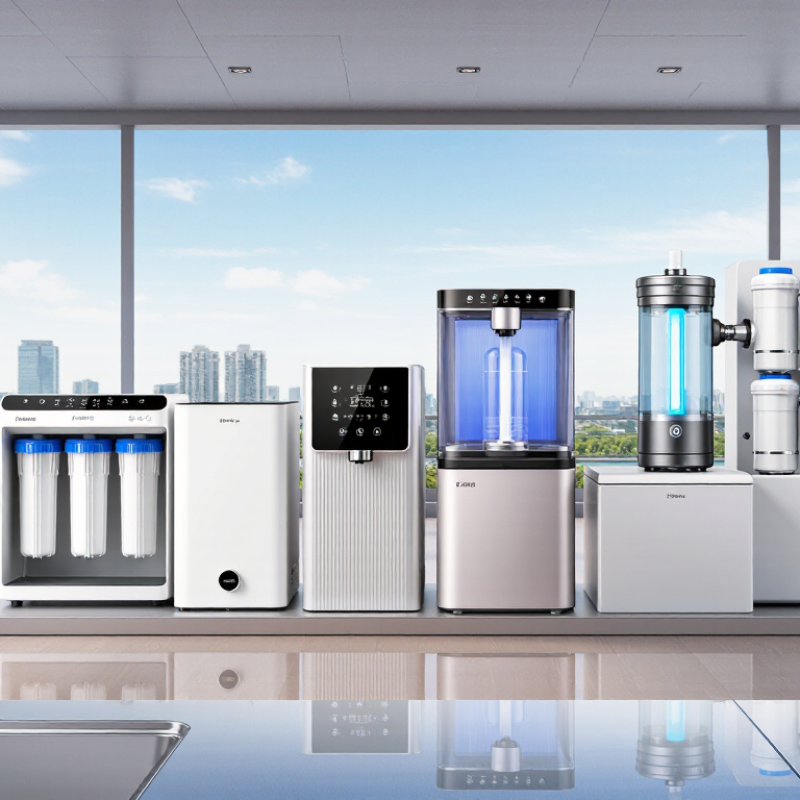
2026 Top Pure Water Machine Types for Global Buyers
Clean water is becoming a purchasing priority, not merely a household convenience. The WHO and UNICEF Joint Monitoring Programme reported that 2.2 billion people lacked safely managed drinking water in 2022. That figure gives every Pure Water Machine decision greater importance.
Global buyers now compare reverse osmosis, ultrafiltration, ultraviolet, distillation, and integrated filtration systems. Each type handles different contaminants, water pressures, energy conditions, and maintenance demands. A compact reverse osmosis unit may suit an apartment kitchen. A UV system may work better where water is microbiologically unsafe but relatively clear. A rural buyer may need sediment protection before any advanced treatment stage.
The details matter.
The World Health Organization’s Guidelines for Drinking-water Quality emphasize risk assessment, treatment performance, and regular monitoring. Meanwhile, the 2024 United Nations World Water Development Report highlights growing pressure on freshwater reliability and infrastructure. These reports do not support a one-size-fits-all purchase.
Peter Gleick, co-founder of the Pacific Institute and a leading water expert, stated, “We are not running out of water, but we are running out of cheap water.” His warning remains practical. Buyers should examine recovery rates, filter replacement intervals, certification, local service access, and wastewater output—not only advertised purity.
Some market forecasts appear overly confident.
This guide evaluates the top Pure Water Machine types for global buyers in 2026. It considers performance, operating cost, installation complexity, climate conditions, and evidence behind product claims. No machine solves every water problem. A reliable choice begins with testing the source water and admitting where product specifications remain incomplete.
What Defines a Pure Water Machine in 2026?
2026 Top Pure Water Machine Types for Global Buyers
What Defines a Pure Water Machine in 2026?
A “pure water machine” is not a universal technical category. In 2026, buyers should define it through verified contaminant reduction, not attractive packaging. The World Health Organization’s Guidelines for Drinking-water Quality recommend risk-based control from source to household tap. That means testing the incoming water first. A machine designed for coastal well water may perform poorly against municipal chlorine or agricultural nitrates.
The need is substantial. The WHO/UNICEF Joint Monitoring Programme reported that 2.2 billion people lacked safely managed drinking water in 2022. Demand is practical. Reverse osmosis can reduce many dissolved salts, while ultrafiltration targets particles and some microorganisms. Ultraviolet treatment can inactivate microorganisms, but it cannot remove dissolved chemicals. Activated carbon helps with chlorine, odors, and selected organic compounds. Distillation remains useful where high mineral removal matters, though it consumes more energy.
A reliable 2026 system should show independent test results, flow capacity, replacement intervals, and wastewater ratios. It should also include sensors for conductivity, leakage, and filter life. I would not call every filtered dispenser “pure.” That label can hide weak maintenance plans. WHO guidance also stresses monitoring after treatment, not only at installation. The imperfect part is human behavior: forgotten cartridges can undermine excellent engineering. Buyers should examine local water reports, service access, and disposal requirements before comparing machine types.
Main Pure Water Machine Types and Their Purification Methods
2026 Top Pure Water Machine Types for Global Buyers
Main Pure Water Machine Types and Their Purification Methods
Reverse osmosis machines use pressure to push water through a semi-permeable membrane. They reduce dissolved salts, metals, and many microorganisms. These systems suit homes, offices, and light industrial applications. However, they need stable pressure and regular filter replacement. Wastewater can also become a practical concern.
Ultrafiltration machines remove suspended particles, bacteria, and larger impurities through fine membranes. They usually preserve more minerals than reverse osmosis systems. Ultraviolet machines use light to inactivate microorganisms without adding chemicals. They work best after pre-filtration, because cloudy water can reduce light exposure. Pressure matters. Maintenance is real.
Distillation machines boil water and condense the vapor separately. This method removes many dissolved substances, but it consumes considerable energy. Some buyers combine methods, such as sediment filtration, activated carbon, reverse osmosis, and ultraviolet treatment. The right combination depends on feedwater quality, daily demand, electricity stability, and available service skills. Testing local water is essential before selection. A low-cost machine may perform poorly when its membranes face heavy scaling. Even advanced equipment needs honest monitoring, timely sanitation, and realistic expectations. No single purification method wins every case.
How Each Machine Performs Across Different Water Conditions
2026 Top Pure Water Machine Types for Global Buyers: How Each Machine Performs Across Different Water Conditions
Reverse osmosis machines suit hard water, dissolved salts, and high total dissolved solids. They can reduce many chemical contaminants, but waste water and require stable pressure. The World Health Organization recommends E. coli be absent from every 100 millilitres of drinking water. RO alone does not guarantee microbial safety after storage. Ultraviolet machines work well against bacteria and viruses in clear water. They perform poorly when sediment blocks the lamp. The WHO Guidelines for Drinking-water Quality identify turbidity as a key factor affecting disinfection performance.
Ultrafiltration machines handle suspended particles, bacteria, and some parasites. They preserve more minerals than RO systems. However, they do not reliably remove dissolved salts or many small chemicals. Distillation performs strongly against salts, metals, and microbes. It consumes more energy and may produce flat-tasting water. The 2024 WHO/UNICEF Joint Monitoring Programme reported that 2.2 billion people lacked safely managed drinking water in 2022. Local testing remains essential. A coastal household and a rural household need different equipment.
Tips: Test turbidity, hardness, TDS, iron, and microbial quality before purchasing. Replace filters by measured pressure loss, not habit alone. Keep a simple service log. Many buyers overlook storage tanks. That mistake can recontaminate treated water. I have seen systems selected by advertised purity, while maintenance access was ignored. Performance is not only laboratory efficiency; it is daily reliability.
2026 Top Pure Water Machine Types for Global Buyers - How Each Machine Performs Across Different Water Conditions
| Machine Type | Primary Purification Principle | Typical Contaminant Reduction | Performance in Hard Water | Performance with High TDS | Performance with Microbial Risk | Performance with Turbidity or Sediment | Typical Water Recovery or Output | Energy Requirement | Main Consumables and Maintenance | Best-Fit Applications | Important Limitations | Overall Suitability for Global Buyers |
|---|---|---|---|---|---|---|---|---|---|---|---|---|
| Reverse Osmosis (RO) | Pressure-driven membrane separation through a semipermeable membrane, usually supported by sediment and carbon prefilters. | Typically reduces dissolved salts, many heavy metals, fluoride, nitrate, and numerous other dissolved contaminants. Actual performance depends on membrane condition and feed-water chemistry. | Good with pretreatment Hardness can cause scale and shorten membrane life. A softener, antiscalant, or suitable pretreatment may be required. | Excellent Commonly used where TDS is high, including brackish-water applications when the system is properly designed. | Good, but not standalone disinfection The membrane can reduce many microorganisms, but post-treatment disinfection and sanitary design are recommended. | Moderate after prefiltration Suspended solids can foul the membrane quickly without sediment filtration. | Point-of-use systems commonly recover about 20–50%; larger or optimized systems may achieve higher recovery. Reject water is produced. | Electric pump power is often used, especially for low-pressure supplies or high-TDS feed water. | Prefilter replacement is commonly required every 6–12 months; the RO membrane often lasts about 2–5 years depending on feed water and maintenance. | Drinking water, food service, laboratories, desalination, and locations with high TDS or multiple dissolved contaminants. | Produces concentrate water, needs adequate pressure, and may remove beneficial minerals. Feed water should be tested before selection. | Very High The most versatile option for dissolved-contaminant reduction when correctly sized and maintained. |
| Ultrafiltration (UF) | Low-pressure membrane filtration with pores smaller than conventional microfiltration but larger than RO membranes. | Reduces suspended solids, colloids, bacteria, and many cysts. It generally does not remove dissolved salts, most dissolved metals, or most small dissolved organic chemicals. | Fair Hardness passes through and may cause scaling in downstream equipment, although the membrane itself is less affected than an RO membrane in some applications. | Poor for TDS reduction Most dissolved salts remain in the treated water. | Good for many bacteria and cysts Virus reduction varies by membrane rating and system validation. It should not be assumed to provide complete disinfection. | Good after coarse pretreatment Effective against many particles, but heavy sediment loads require prefiltration. | Often produces little or no continuous reject water; recovery depends on flushing and system design. | Usually low energy; many household systems operate using existing mains pressure without a booster pump. | Periodic backwashing or flushing may be needed. Prefilters are commonly replaced every 6–12 months. | Municipal water with low-to-moderate TDS, rural drinking-water treatment, and applications prioritizing mineral retention. | Does not solve high TDS, salinity, hardness, nitrate, or fluoride problems. | High for low-TDS feed water Efficient where particulate and microbial control are more important than dissolved-contaminant removal. |
| Ultraviolet (UV) | Ultraviolet-C light damages the DNA or RNA of microorganisms and prevents replication. | Inactivates many bacteria, viruses, and protozoa when the delivered UV dose is adequate. It does not remove dissolved chemicals, salts, metals, or particles. | Good Hardness does not directly reduce microbial inactivation, but scale on the lamp sleeve can reduce UV transmission. | Poor for TDS Leaves dissolved salts and other non-microbial contaminants unchanged. | Excellent when properly designed Requires suitable UV dose, flow control, clear water, and reliable electricity. It does not provide a residual disinfectant. | Poor without pretreatment Turbidity and color can shield microorganisms from UV light. | Normally produces no reject stream and can provide near-continuous flow at the rated capacity. | Requires continuous electricity during operation. | The lamp is commonly replaced about annually, while the quartz sleeve should be inspected and cleaned to control scale. | Microbial control for treated municipal water, private wells, and as a final barrier after filtration. | Does not physically remove contaminants; treated water can be recontaminated after leaving the chamber if storage and plumbing are unsanitary. | High as a disinfection stage Best combined with sediment filtration and, where needed, RO or activated carbon. |
| Distillation | Boils water and condenses the vapor, leaving many nonvolatile impurities behind. | Can significantly reduce salts, many heavy metals, microorganisms, and numerous nonvolatile contaminants. Volatile compounds may require activated-carbon treatment. | Excellent Hardness minerals remain primarily in the boiling chamber and must be removed during cleaning. | Excellent Highly effective for dissolved solids when the unit is operated correctly. | Excellent Boiling provides strong microbial destruction; safe storage is still necessary after treatment. | Good after settling or filtration Suspended matter is left behind but can foul the boiler and require cleaning. | Low water recovery is typical, and production is relatively slow compared with pressure-driven systems. | High electricity or heat demand because water must be vaporized and condensed. | Regular descaling and cleaning are required. Carbon polishing may be needed for volatile organic compounds and taste control. | Small-volume laboratory, medical, technical, and household applications requiring very low mineral content. | Slow output, higher operating cost, heat generation, and substantial energy use make it less practical for large continuous demand. | High for very low-mineral water Particularly useful where electricity is reliable and water demand is limited. |
| Activated Carbon Filtration | Adsorption onto porous carbon media, often combined with sediment filtration. | Can reduce chlorine, many taste-and-odor compounds, and selected organic chemicals. Performance varies greatly with carbon type, contact time, and contaminant concentration. | Poor for hardness Calcium and magnesium generally pass through. | Poor for TDS Does not substantially reduce dissolved salts. | Limited It is not a dependable standalone disinfection method. Bacteria can grow on poorly maintained carbon filters. | Fair after sediment filtration Carbon beds can clog when exposed to high turbidity. | Usually provides continuous flow with little or no reject water. | Generally requires no electricity unless paired with a pump or automatic control valve. | Cartridges or media require regular replacement based on capacity and water quality; exhausted carbon can release trapped contaminants. | Chlorine and taste reduction, RO pretreatment, and polishing of otherwise treated municipal water. | Not suitable as the only treatment for salinity, nitrate, hardness, or microbiologically unsafe water. | High as a pretreatment or polishing stage Usually part of a multi-stage system rather than a complete purifier. |
| Electrodeionization (EDI) | Uses ion-exchange membranes, resin, and an electric field to continuously remove ionized impurities from pretreated water. | Produces very low conductivity water by removing ions. It is not intended to remove particles, microorganisms, or non-ionized organic compounds without upstream treatment. | Good after RO Hardness must be largely removed beforehand to prevent scaling and performance loss. | Excellent after RO pretreatment Feed water with high ionic loading generally exceeds EDI limits without upstream desalination. | Requires upstream control EDI is not a primary disinfection process; sanitary design and microbial control are essential. | Poor without pretreatment Particles and colloids can foul the membranes and resin. | Usually operates as a continuous process with a small concentrate or electrode-rinse stream, depending on design. | Requires continuous electricity, but avoids routine chemical regeneration of mixed-bed resin in normal operation. | Needs high-quality RO permeate, periodic sanitization, monitoring of conductivity, and replacement of modules after long service intervals. | Laboratories, pharmaceutical water systems, electronics manufacturing, and other high-purity applications. | High capital cost, sensitive feed-water requirements, and unsuitable performance when used directly on untreated or highly variable water. | Very High for high-purity systems Best selected as a polishing stage after effective pretreatment, especially RO. |
| Nanofiltration (NF) | Pressure-driven membrane filtration with separation between UF and RO; particularly effective for multivalent ions and selected organic compounds. | Often reduces hardness, color, larger organic molecules, and some sulfate and heavy-metal ions. Monovalent salt removal is generally lower than RO. | Good Can substantially reduce hardness, but scaling control remains important. | Good for selected TDS components May reduce TDS but usually does not desalinate as completely as RO. | Moderate with validated membrane performance Should be paired with disinfection where microbial safety is required. | Moderate after pretreatment Suspended solids and colloids can foul the membrane. | Often recovers about 50–85% in well-designed systems; the actual rate depends on feed quality and operating pressure. | Requires pump energy, generally less demanding than RO at comparable conditions but dependent on feed-water pressure. | Needs sediment and often carbon pretreatment, periodic cleaning, and monitoring for scaling and membrane fouling. | Water softening with partial desalination, color reduction, food processing, and industrial pretreatment. | May not adequately remove monovalent salts, nitrate, or very high salinity when low conductivity is required. | High for targeted treatment Useful when hardness and selected organics must be reduced without maximum desalination. |
| Solar Distillation | Uses solar heat to evaporate water and condense the vapor in a separate collection surface. | Can reduce salts, many metals, and microorganisms. Volatile contaminants may carry over unless additional treatment is included. | Excellent Hardness remains in the brine or basin and must be periodically removed. | Excellent in principle Can treat saline or brackish water, but production depends strongly on sunlight and ambient conditions. | Excellent through evaporation Collected water must be protected from contamination after condensation. | Good with proper basin management Sediment remains behind but can reduce efficiency if it accumulates. | Low and variable output; production depends on solar radiation, collector area, temperature, and weather. | Very low operating electricity demand, although pumps or controls may require power. | Requires cleaning of the evaporator and condenser surfaces, brine removal, and inspection for biological growth. | Remote areas, emergency supply, small-scale desalination, and locations with strong solar resources. | Weather-dependent, space-intensive, slow, and generally unsuitable for consistent high-volume supply without energy storage or backup. | Moderate for off-grid use Valuable where sunlight is abundant and water demand is modest. |

Selection note: Actual results depend on feed-water analysis, flow rate, pressure, temperature, membrane or media specifications, maintenance, and hygienic installation. A laboratory water test should be completed before final equipment selection.
Selecting the Right Machine for Residential and Commercial Use
For global buyers, “pure water” is not a single specification. It may mean low minerals, safe drinking water, or laboratory-grade output. The WHO and UNICEF Joint Monitoring Programme reported that 2.2 billion people lacked safely managed drinking water in 2022. This gap increases demand for dependable treatment equipment. Test first. A certified laboratory analysis should identify hardness, salinity, microbes, metals, and seasonal changes before selecting a machine.
For homes, reverse osmosis suits high dissolved solids, while ultraviolet systems target microorganisms without removing minerals. Ultrafiltration can protect against particles and some pathogens, but it does not reduce salt. Capacity matters too. A family may need several litres daily, not an oversized commercial skid. EPA WaterSense materials note that conventional point-of-use reverse osmosis units can discharge up to five gallons for every gallon treated. Recovery efficiency deserves attention.
Commercial buyers should calculate peak flow, operating hours, storage volume, and maintenance access. Pretreatment may be essential where sediment or hardness is high. Membrane systems often need scheduled cleaning and replacement filters; neglected maintenance can undermine excellent specifications. The 2024 United Nations World Water Development Report emphasizes that water quality and management are closely linked to resilience and public health. In practice, the cheapest machine can become expensive through downtime, reject water, and unplanned service. A perfect choice on paper may still fail at the tap. Recheck the assumptions.
2026 Top Pure Water Machine Types for Global Buyers
Selecting the right machine for residential and commercial use
Reverse osmosis systems generally provide higher production capacity than distillers, while whole-house and commercial systems are designed for continuous, higher-volume demand. The figures show representative nominal permeate capacities converted from commonly used gallon-per-day ratings; actual output depends on feed-water temperature, pressure, water quality, recovery rate, and maintenance.
Global Buying Factors: Standards, Installation, Cost, and Maintenance
2026 Top Pure Water Machine Types for Global Buyers
Global buyers should match technology with water quality, not marketing claims. The WHO/UNICEF Joint Monitoring Programme reported that 2.2 billion people lacked safely managed drinking water in 2022. That figure shows why source testing matters.
Distillation is effective, yet usually demands more energy and time.
Standards should be checked before purchase. Look for verified claims against NSF/ANSI drinking-water treatment standards, electrical safety rules, and local plumbing requirements.
Installation also changes performance. A rooftop tank, unstable pressure, or hot climate may require pre-filtration, a booster pump, or shaded equipment. The International Energy Agency notes that energy efficiency remains a major operating concern across water systems.
Therefore, buyers should compare power use, recovery rate, wastewater volume, and replacement-filter costs. A low purchase price can become expensive. This is easy to underestimate.
Test the source water first. Keep two years of spare-filter costs in the budget. Ask for flow-rate data at working pressure, not laboratory pressure.
Schedule sanitation and membrane checks according to actual usage. Record taste, pressure, and output changes. Small records help reveal failures early.
One practical weakness remains: many buyers compare specifications, but ignore local technicians and spare-part availability. That choice can delay repairs and reduce trust in an otherwise suitable machine.