How to Get an Accurate Full Truckload Quote for Your Shipping Needs?
Getting an accurate full truckload quote can seem daunting. Many businesses struggle to find the right balance between cost and service. According to logistics expert John Williams, “An accurate quote is essential for efficient shipping.” This statement emphasizes the importance of understanding your shipping needs.
When seeking a full truckload quote, it’s vital to provide precise details about your shipment. Consider factors like weight, distance, and required delivery times. These elements can greatly influence the quotes you receive. Often, businesses overlook specifics, leading to surprises later.
Additionally, it helps to compare multiple quotes. Each carrier has its own pricing structure. Some may offer lower rates but lack reliability. Companies should reflect on the trade-offs they make when selecting a service. Accurate information and careful consideration lead to better decisions. In the end, a solid full truckload quote should align with your business goals, not just your budget.

Understanding Full Truckload Shipping and Its Benefits
Full truckload shipping, or FTL, offers a distinct advantage for businesses needing to transport large goods over long distances. Unlike less-than-truckload (LTL) shipping, FTL allows the entire truck to be dedicated to a single shipment. This means less handling and fewer stops along the route. As a result, transit times are often quicker. It can lead to reduced overall shipping costs, especially for larger shipments.
One important aspect is understanding the weight and volume of your freight. Knowing these details helps you make informed decisions. When you request a quote, providing precise measurements is crucial. However, many factors can impact your quoted rate. Seasonal fluctuations, route changes, and fuel prices can all lead to varying estimates. It’s worth reflecting on how these factors may influence your decisions over time.
While FTL can be cost-effective, not all shipments are ideal for this option. Smaller loads might find better value through LTL. It’s important to analyze your own shipping habits. Are you consistently sending large quantities, or do your needs fluctuate? Evaluating your frequency and volume will help you determine the most suitable approach for your shipping needs.
Full Truckload Shipping Costs vs. Delivery Times
Key Factors Influencing Truckload Shipping Quotes
When seeking an accurate full truckload quote, understanding key factors is crucial. Cost can vary widely based on several elements. First, the distance plays a significant role. Longer shipments often incur higher costs due to fuel and driver expenses. Additionally, the nature of the cargo impacts pricing. Hazardous materials or fragile items may require special handling and, subsequently, higher quotes.
Seasonality is another significant factor. According to industry reports, shipping rates can fluctuate by as much as 25% during peak seasons. This can lead to budget surprises if not planned for. Geography is important too. Rates differ in urban areas compared to rural regions. Fewer carriers may operate in remote locations, leading to increased costs.
Tips: Always be transparent about your cargo details. Provide exact weight and dimensions. Small discrepancies can lead to unexpected charges. Monitor current market trends. This can help you negotiate better rates. Lastly, consider consolidating shipments if possible. This approach can maximize efficiency and reduce costs over time.
Steps to Gather Accurate Shipping Information for Quotes
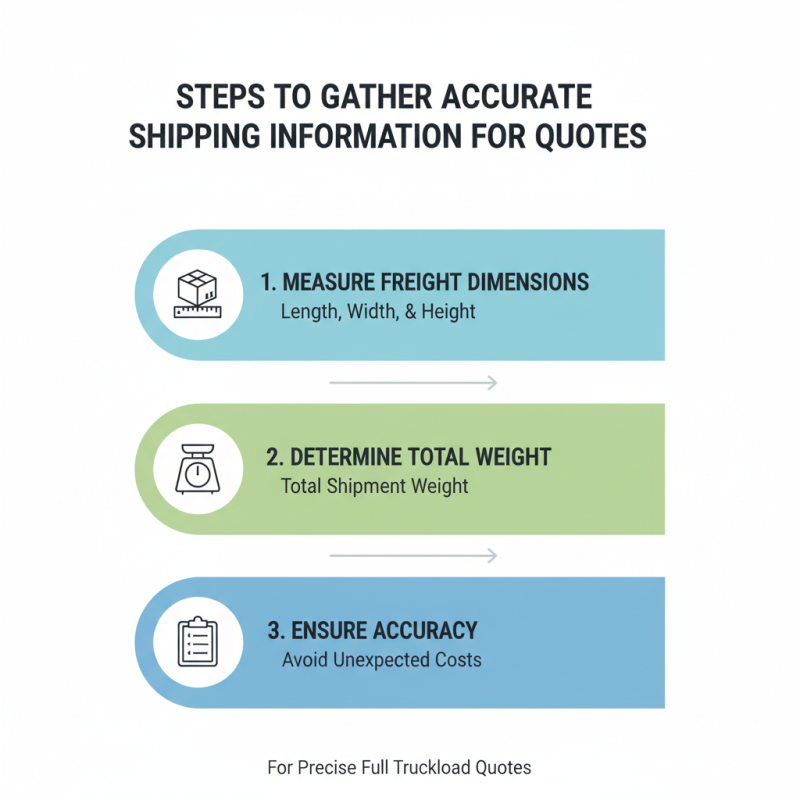
Gathering accurate shipping information is crucial for obtaining precise full truckload quotes. Start by measuring your freight dimensions. Knowing the length, width, and height allows carriers to estimate the space required. Weight is equally important. Provide the total weight of the shipment. Inaccurate weight can lead to unexpected costs.
Next, detail the cargo type. Different materials may require special handling or equipment. For example, fragile items need extra care. Ensure you indicate if your shipment is palletized or in bulk. This detail changes how it will be loaded and transported. Include any access issues at pickup and delivery locations. These may affect the type of truck needed.
Don't overlook the timeline for delivery. Specify your pickup and delivery dates. Carriers often charge differently based on urgency. If you expect delays or have flexible timelines, communicate that. Often, quotes vary based on these nuances. Lastly, remember that not all information will be perfect on your first go. Be ready to adjust your details as needed.
How to Compare Quotes from Different Freight Carriers
When comparing quotes from different freight carriers, understanding the details is crucial. Price isn't the only factor. Service quality matters too. Reports show that nearly 38% of shippers prioritize reliability over cost. This means that a cheaper quote might not always be the best deal.
Look closely at the services included in each quote. Some carriers may offer additional services, while others might charge extra later. According to industry data, hidden fees can inflate costs by as much as 20%. It’s essential to ask about potential additional charges upfront. A lower rate can quickly become expensive if unexpected costs arise.
Also, pay attention to transit times. A carrier with a slightly higher quote might deliver your freight faster. Research shows that 45% of shipping delays stem from poor carrier communication. Clear communication reduces risks, ensuring your load arrives on time. Always ask for performance metrics from carriers. These details can offer insight into their reliability and help you make a better-informed decision.
Tips for Negotiating Your Full Truckload Shipping Rates
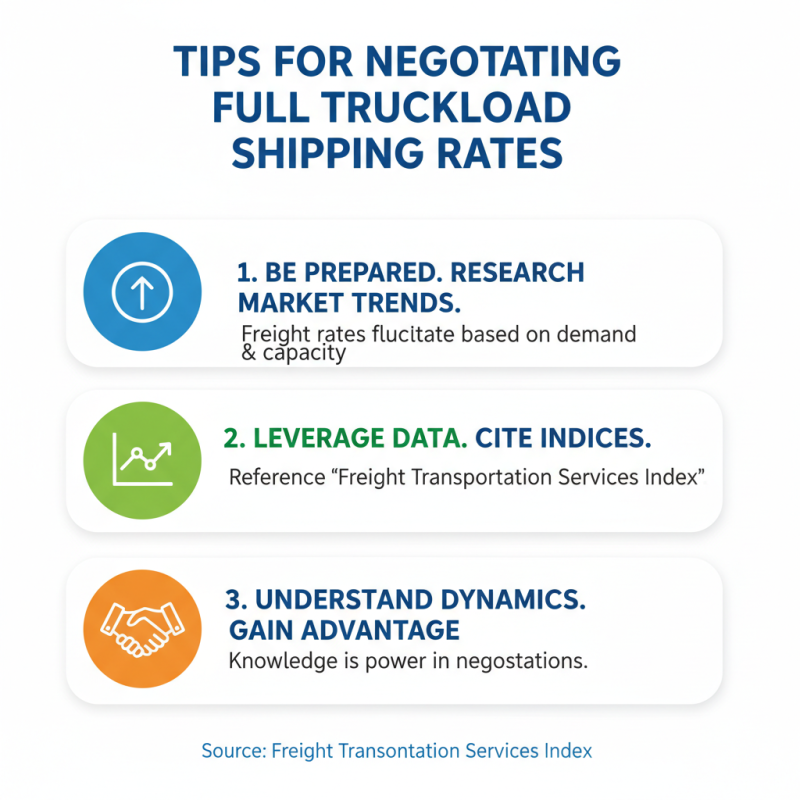
When negotiating full truckload shipping rates, it’s important to be prepared. Start by knowing the market trends. According to a recent Freight Transportation Services Index, freight rates can vary significantly based on demand and capacity. Understanding this can provide leverage in negotiations.
Research is crucial. Gather multiple quotes to establish a baseline. Aim to compare similar services, taking into account distance, cargo type, and specific delivery requirements. Industry data shows that shippers who negotiate based on route density often achieve better rates.
Building rapport with carriers can also yield benefits. A positive relationship may lead to more favorable terms or discounted rates. Transparency is key. Provide accurate details about your shipping needs. Miscommunication can lead to unhappy surprises in pricing. Remember, being clear and direct often fosters a healthier negotiation atmosphere. Consider revisiting terms regularly, as market conditions can shift rapidly.