
What Are the Best Cargo Shipping Containers in 2026?
Choosing the best cargo shipping container in 2026 requires more than comparing prices and exterior paint. The right unit protects goods, controls operating costs, and supports predictable handling across ports, rail yards, and warehouses. A standard 20-foot container suits dense, heavy cargo, while a 40-foot high-cube model offers extra volume for lighter pallets. Reefer containers serve temperature-sensitive products, but their cooling systems demand careful inspection and dependable power connections. Fit matters.
Experienced shippers examine door seals, floor strength, corner posts, locking rods, ventilation, and visible corrosion before booking equipment. A clean-looking container may still hide damp insulation or uneven flooring. Details matter. Buyers should verify dimensions, payload limits, inspection records, and recognized safety certification through reliable suppliers and official documentation. In 2026, digital tracking and remote temperature monitoring can improve visibility, yet technology cannot replace physical checks. It is easy to overvalue smart features and overlook basic maintenance. That mistake can create delays, damaged packaging, or unexpected handling charges.
This guide compares common container types, practical specifications, sustainability considerations, and total ownership costs. It also considers how route length, climate, cargo density, loading methods, and storage conditions affect performance. No single container wins every shipment. A lower-cost used unit may be sensible for short-term, non-sensitive freight, while new equipment can provide stronger reliability for demanding routes. Some recommendations remain judgment calls, especially when supplier quality varies by region. Careful documentation, lawful cargo classification, and professional advice help turn a promising choice into a dependable shipping plan.
How ISO 668 Defines Standard Container Sizes for 2026
What Are the Best Cargo Shipping Containers in 2026?
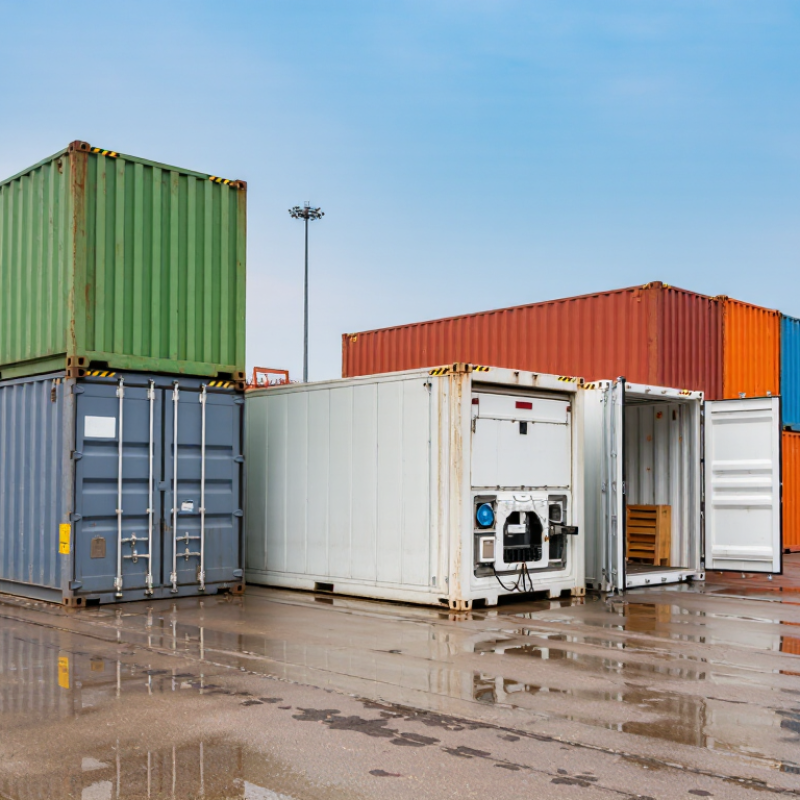
ISO 668:2020 remains the practical reference for choosing standard cargo containers in 2026. It defines Series 1 container dimensions, including the familiar 20-foot and 40-foot formats. A standard 20-foot container measures about 6,058 millimeters long and 2,438 millimeters wide externally. The standard 40-foot unit extends to approximately 12,192 millimeters. Both usually have an external height near 2,591 millimeters. High-cube versions add roughly 305 millimeters of internal height.
That extra space matters for light, bulky cargo. A 20-foot unit often suits dense machinery or palletized materials. A 40-foot high cube works better for furniture, packaged equipment, and goods needing vertical clearance. UNCTAD reported approximately 858 million TEUs in global container port throughput during 2023, showing how widely these standardized dimensions operate across supply chains. Source: UNCTAD, Review of Maritime Transport 2024.
ISO 668 supports compatibility, but it does not guarantee every operational detail. Door openings, internal payload limits, flooring, and cargo securing still require inspection. That distinction is easy to miss. In field use, a nominally suitable container can waste space because pallets, forklifts, or packaging ignore internal tolerances. My earlier assumption was simple: bigger means better. It does not. The best choice depends on cargo density, loading method, route equipment, and required clearance. Source: ISO 668:2020, Series 1 freight containers.
What Are the Best Cargo Shipping Containers in 2026? — How ISO 668 Defines Standard Container Sizes for 2026
| Container Type | ISO 668 Nominal Length | External Dimensions (L × W × H) |
Typical Internal Dimensions (L × W × H) |
Approximate Internal Volume | Typical Door Opening (W × H) |
Best-Suited Cargo | Key 2026 Selection Advantage |
|---|---|---|---|---|---|---|---|
| 20-Foot Standard Dry Container | 20 ft / 6,058 mm | 6,058 × 2,438 × 2,591 mm | Approximately 5,898 × 2,350 × 2,390 mm |
Approximately 33.1 m³ |
Approximately 2,340 × 2,280 mm |
Dense and heavy cargo, machinery, metal products, palletized goods, and general dry freight. | Efficient for heavy cargo because the floor and payload capacity are used without requiring a long container. |
| 40-Foot Standard Dry Container | 40 ft / 12,192 mm | 12,192 × 2,438 × 2,591 mm | Approximately 12,032 × 2,350 × 2,390 mm |
Approximately 67.7 m³ |
Approximately 2,340 × 2,280 mm |
Cartons, consumer goods, furniture, textiles, packaged products, and high-volume general cargo. | A practical balance between available cubic capacity and broad intermodal compatibility. |
| 40-Foot High-Cube Dry Container | 40 ft / 12,192 mm | 12,192 × 2,438 × 2,896 mm | Approximately 12,032 × 2,350 × 2,695 mm |
Approximately 76.3 m³ |
Approximately 2,340 × 2,585 mm |
Lightweight, bulky, or tall cargo such as furniture, packaging materials, appliances, and retail inventory. | Provides about 300 mm of additional internal height compared with a standard-height container. |
| 45-Foot High-Cube Dry Container | 45 ft / 13,716 mm | 13,716 × 2,438 × 2,896 mm | Approximately 13,556 × 2,350 × 2,695 mm |
Approximately 86.0 m³ |
Approximately 2,340 × 2,585 mm |
Large-volume retail freight, lightweight manufactured goods, consolidated shipments, and high-cube cargo. | Offers the greatest cubic capacity in this comparison while retaining the standard 8-foot external width. |
| 20-Foot Open-Top Container | 20 ft / 6,058 mm | 6,058 × 2,438 × 2,591 mm Height can vary with the removable roof arrangement. |
Approximately 5,898 × 2,350 × 2,350 mm |
Approximately 32.6 m³ |
Rear doors plus a removable-top loading route | Over-height or awkwardly shaped cargo, stone, scrap, timber, and machinery that must be loaded from above. | Top loading reduces handling restrictions for cargo that cannot pass through standard doors. |
| 20-Foot Platform or Flat-Rack Container | 20 ft / 6,058 mm | Approximately 6,058 × 2,438 mm footprint End-wall and height configurations vary. |
Not applicable as an enclosed container | Not applicable | Open loading area | Heavy machinery, vehicles, construction equipment, steel products, and over-width or over-height cargo. | Designed for project cargo that cannot be accommodated inside an enclosed dry container. |
| Technical note: ISO 668 establishes the principal external dimensions, corner-fitting locations, and related dimensional classifications for Series 1 freight containers. Internal dimensions, door openings, usable volume, tare mass, and payload vary according to container design, wall thickness, flooring, doors, and operating requirements. The dimensions marked “approximately” are representative planning values and should be verified against the equipment specification before booking or loading. | |||||||
Related Posts
-

2026 Best Sea Container Options for Sustainable Living and Shipping Solutions?
-
What is a Freight Container and How Does It Work?
-

How to Ship a Container Efficiently for Global Trade?
-

What is a Sea Container and How is it Used?
-
Discover the Best Deals on Large Shipping Containers Today?
-
Best Cargo Container Options for Global Buyers Today?