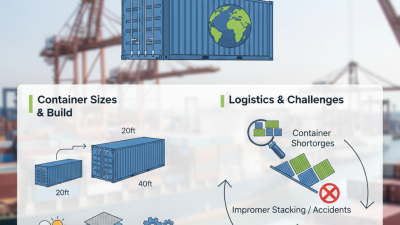
Why Are Cargo Containers Essential for Global Trade and Shipping?
Cargo containers are the backbone of global trade and shipping. In 2021, over 1.8 billion twenty-foot equivalent units (TEUs) were transported worldwide. This number reflects the growing reliance on cargo containers to move goods efficiently across oceans and borders. According to the International Maritime Organization, around 80% of global trade by volume is carried by ships. This statistic underscores the critical role of cargo containers in the global supply chain.
Expert insights from Dr. Jane Foster, a leading authority on logistics, highlight the significance of cargo containers. She states, "Every cargo container represents a vital link in the chain of international commerce." This emphasizes how each container, regardless of size or content, plays an essential role in maintaining trade flow. However, challenges remain. The COVID-19 pandemic exposed vulnerabilities in supply chains and container shortages.
Despite these issues, the importance of cargo containers cannot be overstated. They promote economic growth and facilitate trade between nations. As the industry evolves, ensuring the reliability and security of cargo containers must remain a top priority. Addressing these challenges can enhance global trade and ensure sustainable shipping practices.
The Role of Cargo Containers in Facilitating International Trade
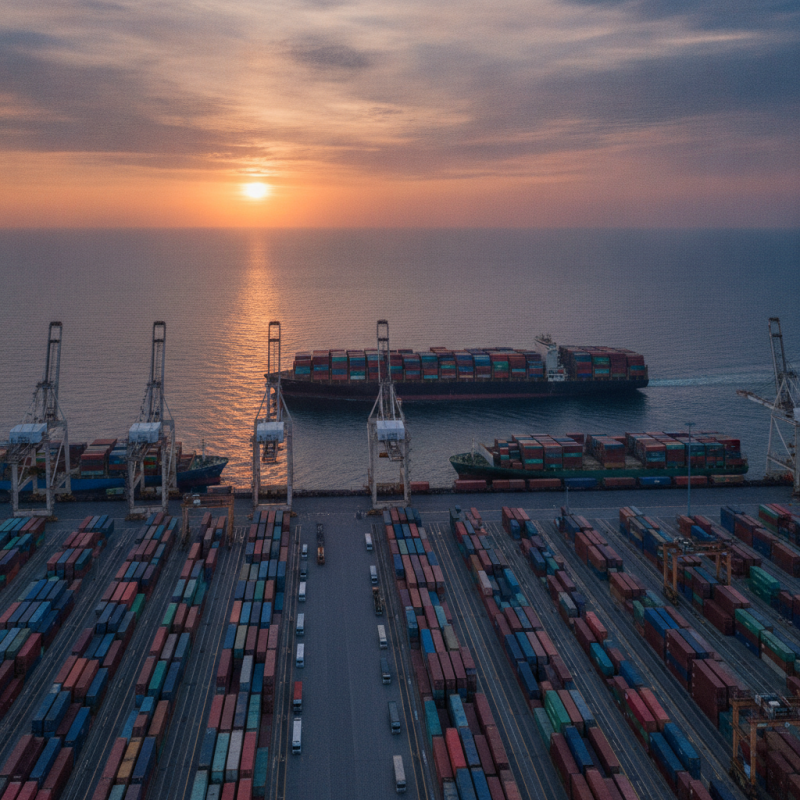
Cargo containers revolutionized international trade. They provide a standardized way to transport goods efficiently. These large metal boxes simplify loading and unloading processes at ports. With containers, cargo can be transferred from ships to trucks with ease. This streamlining reduces delivery times and costs.
Tips: Consider the shape and size of your cargo. Proper packing within containers maximizes space. Always ensure that goods are secured to prevent damage during transit.
Containers also enhance security. They protect goods from harsh weather and theft. Many shipping companies use seals to ensure safety. However, the globalization of container shipping brings challenges. Not all ports are equipped to handle large container ships. This can create bottlenecks in the supply chain.
Tips: Research port facilities before shipping. Know their handling capabilities to avoid delays. It’s crucial to understand your logistics options.
The role of cargo containers extends beyond transportation. They enable economies to grow by fostering international trade. Yet, some regions face difficulties due to inadequate infrastructure. Identifying these challenges can lead to better strategies. Addressing them will improve global trade efficiency.
History and Evolution of Cargo Containers in Global Shipping
Cargo containers have transformed global shipping since their introduction. The concept dates back to the 1950s when Malcolm McLean developed the modern intermodal container. His design allowed for efficient loading and unloading, paving the way for containerized shipping.
Over the decades, containers have evolved in size, shape, and materials. Initially, they were made from steel and had a uniform size. This standardization was crucial. It enabled ships, trucks, and trains to transport goods seamlessly. However, not all regions adapted quickly. Some ports struggled with infrastructure, delaying the benefits of container shipping.
Today, the use of cargo containers is ubiquitous in global trade. They facilitate transport for everything from electronics to food. Despite their efficiency, challenges remain. Issues like congestion in ports, environmental impact, and security checks can disrupt supply chains. The reliance on container shipping raises questions about sustainability and resilience in times of crisis.
Containerized Cargo Transportation by Year (2000-2022)
Advantages of Using Cargo Containers for Efficient Transportation
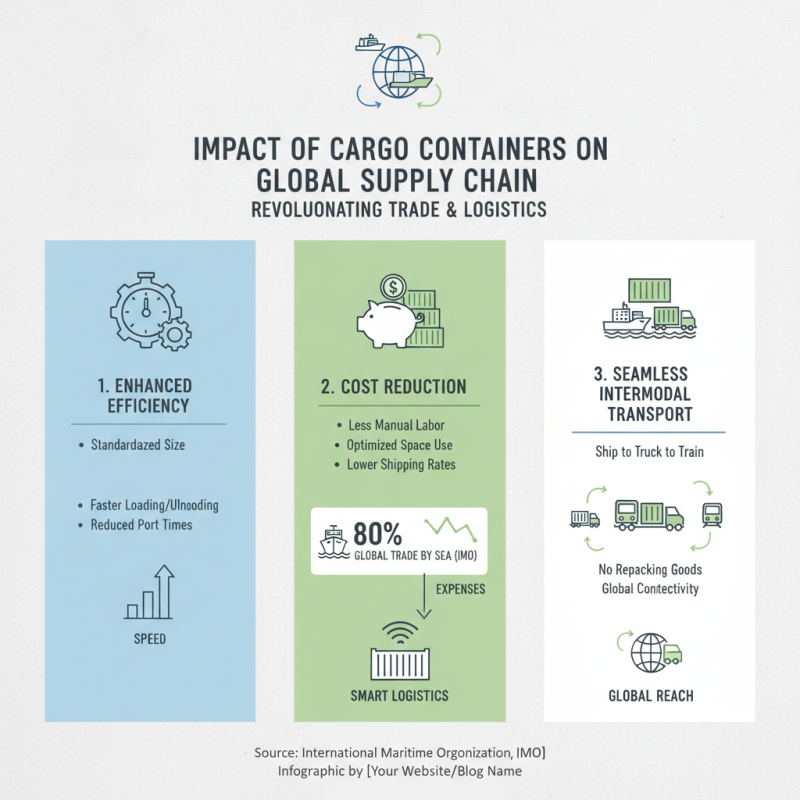
Cargo containers have revolutionized global trade, making transportation efficient and reliable. These standardized steel boxes are key to shipping more than 90% of the world’s cargo. According to the International Maritime Organization, shipping accounts for approximately 80% of global trade by volume. This efficiency stems from containers being easily transferable between ships, trucks, and trains.
One significant advantage is their durability. Cargo containers can withstand harsh weather conditions, protecting the contents inside. They are designed to stack, maximizing space on ships and reducing transportation costs. A report by the World Bank indicates that lowering shipping costs by just 10% can increase global trade by 20%. Such savings greatly benefit businesses and consumers alike.
Tips: Always choose high-quality containers. Inspect for damages prior to loading. Ensure proper stacking to avoid accidents.
The logistics industry faces challenges, including delays and lost shipments. Improper handling can lead to damages. Training staff on container management is essential. Investing in technology can enhance tracking, ensuring cargo safety and efficiency.
Why Are Cargo Containers Essential for Global Trade and Shipping?
| Dimension |
Details |
| Container Size Options |
20 ft, 40 ft, 40 ft HC |
| Weight Capacity |
Max payload: up to 28 tons (20 ft), 30 tons (40 ft) |
| Material |
General: Steel, Aluminum, Wood-based for certain containers |
| Types of Containers |
Dry, Refrigerated, Open-top, Flat-rack |
| Global Trade Impact |
Facilitates approximately 90% of global trade |
| Transportation Efficiency |
Reduces loading/unloading time; streamlines logistics |
| Security Features |
Lockable doors, sealed and tamper-proof designs |
| Sustainability |
Reusable, recyclable materials used in manufacturing |
Impact of Cargo Containers on Supply Chain Management
Cargo containers have revolutionized supply chain management by enhancing efficiency and reducing costs. According to the International Maritime Organization (IMO), around 80% of global trade by volume is carried by sea. The standardized size of containers allows for seamless intermodal transportation. This means goods can move effortlessly from ships to trucks or trains.
The reliance on containers has brought about vulnerability. In 2021, the global supply chain faced significant disruptions. The blockage of the Suez Canal affected over 400 ships, highlighting a critical dependency on container logistics. When a single point in this system fails, delays ripple throughout the supply chain, impacting industries across the globe.
Efforts to improve resilience are ongoing. Companies are increasingly adopting digital technologies to track and manage shipments. Data from the Logistics Management report shows that 50% of companies are investing in advanced analytics for better decision-making. Yet, challenges persist. Labor shortages and port congestion remain pressing issues, causing inconsistent delivery times. The reliance on containers continues to demand a reevaluation of global trade practices.
Challenges and Innovations in Cargo Container Logistics
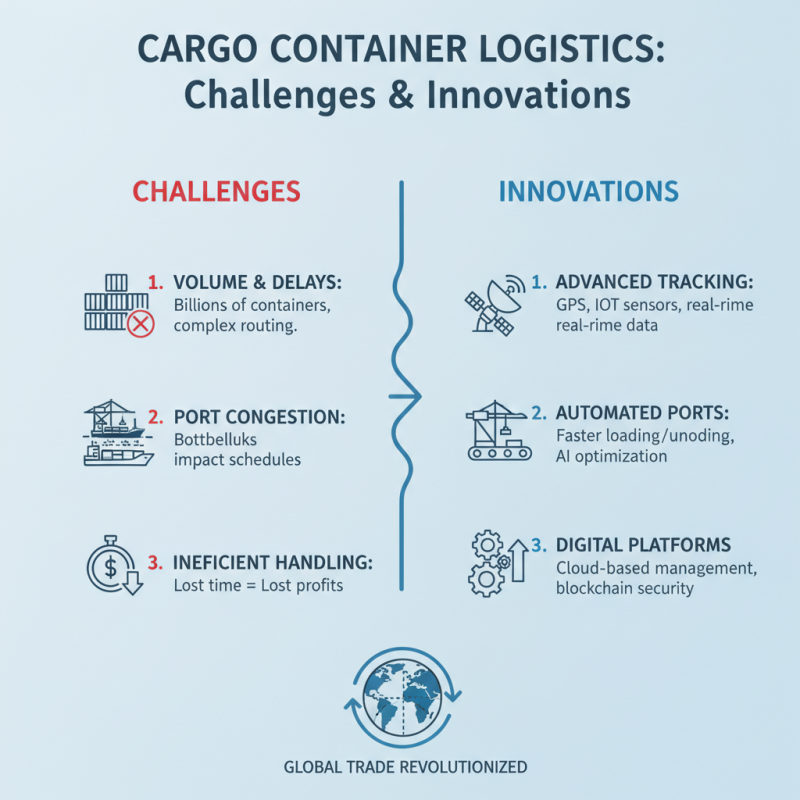
Cargo containers have revolutionized global trade, yet their logistics also face challenges. The sheer volume of containers requires advanced tracking systems to avoid delays. Ports can become congested, impacting shipping schedules. Efficient handling is crucial, as time lost can translate to lost profits.
Technology is driving innovations in container logistics. Automated systems streamline loading and unloading. Drones and AI help in monitoring container locations. Smart containers equipped with sensors track conditions inside. Despite these advances, the reliance on technology can sometimes lead to vulnerabilities. A system failure may halt operations, emphasizing the need for manual backup systems.
Tips: Regular audits of logistics processes highlight bottlenecks. Engage in partnerships to share best practices and improve efficiency. Consider investing in staff training for better adaptation to new technologies. Flexibility is key in an ever-changing global market.