
How to Choose Reliable Gravity Conveyor Manufacturers?
Choosing a reliable conveyor supplier starts with the job the equipment must do. Gravity Conveyor Manufacturers should be able to discuss product dimensions, load weight, carton condition, and the available floor space—not just quote a standard frame. These details affect roller diameter, spacing, bed width, and conveyor slope. A carton with a soft base may need closer roller spacing than a rigid tote. Small details matter.
Ask for a layout drawing and a written specification before comparing prices. Check that the proposed conveyor suits the expected load and operating environment, including dust, moisture, and temperature changes where relevant. Request information about materials, finishes, load ratings, inspection practices, and replacement parts. If the application is unusual, ask how the manufacturer arrived at its recommendation. A clear answer is more useful than a confident promise.
Look beyond the product sheet. Review examples of comparable installations, speak with references when possible, and confirm lead times, warranty coverage, and after-sales support in writing. Check whether spare rollers, bearings, and other wear items are readily available. Not always. A polished catalog does not prove that a supplier will respond when a line stops. Even a capable manufacturer may need more information before giving a firm recommendation. Share real measurements and operating conditions, then notice whether the answers are specific and consistent. That careful comparison helps buyers choose a supplier whose equipment fits the work and whose support remains dependable after delivery.
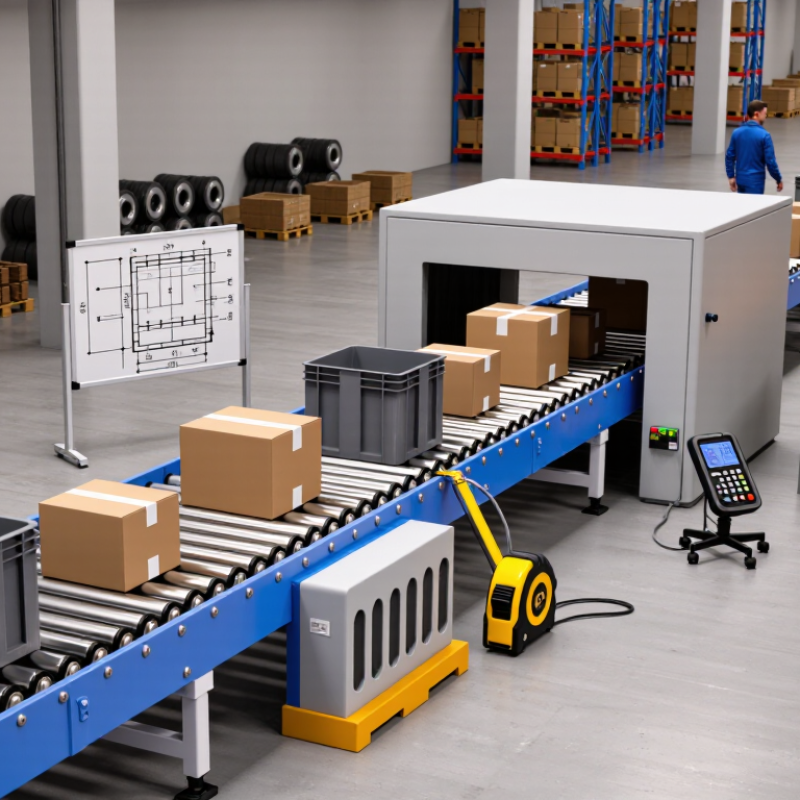
Understand Gravity Conveyor Types and Your Material-Handling Needs
Gravity conveyors use rollers or skate wheels to move loads downhill without powered drive. Roller models suit cartons with flat, firm bottoms and provide stable support. Skate-wheel models can turn easily and work well with lighter, rigid packages. Flexible gravity sections help bridge temporary gaps at packing or dispatch stations. Each type has limits. Small cartons may catch between rollers, while uneven or soft-bottomed loads may not travel smoothly.
Start with the load, not the catalog. Record package weight, dimensions, bottom surface, hourly volume, and the number of bends or transfer points. Check the floor slope and available stopping space; a slight gradient can still let a heavy carton gain unwanted speed. Test actual cartons if possible. Real packages can behave differently from neat drawings.
The 2024 MHI Annual Industry Report found that 55% of respondents planned to increase investment in supply-chain technology and innovation. That figure is not specific to gravity conveyors, but it reflects the need to assess how equipment fits the wider operation.
Ask manufacturers for load-capacity details, roller spacing, and a practical test plan. Also consider operator reach and safe handling. A low-cost section may prove awkward after installation. That deserves a second look.
Define Capacity, Layout, and Operating Requirements
Before comparing gravity conveyor manufacturers, define what the line must carry. Record the heaviest and lightest loads, package dimensions, expected items per minute, and peak-hour volume. A carton weighing 25 kilograms behaves differently from a small, soft-sided parcel. Note whether loads have flat, rigid bottoms; gravity rollers may struggle with uneven bases. These details help manufacturers recommend roller diameter, spacing, frame strength, and slope. Avoid sizing only for today’s average flow. Busy periods matter.
Map the route with measurements, not estimates. Include straight runs, bends, elevation changes, loading points, and any tight aisle clearances. A small floor-plan sketch with dimensions can reveal pinch points early. Describe operating conditions too: shifts per day, temperature, dust, moisture, and how often workers move or clean the equipment. Ask how the proposed layout handles stopping, accumulation, and safe access. Gravity systems are simple, but a slope that works on paper may send cartons too quickly in practice. That is easy to overlook.
Tips: Share photos of actual packages and a marked-up floor plan. Ask the manufacturer to explain its assumptions, including design load and recommended slope. If possible, test representative cartons on a sample section. Watch for wobbling, gaps, and awkward reaching. A test will not answer everything, but it can expose a poor fit before installation.
Assess Manufacturer Experience, Engineering, and Product Quality
Reliable gravity conveyor manufacturers can explain how their equipment fits a real operating environment, not just a catalog diagram. Ask how long they have built gravity systems and whether they have handled loads similar to yours. Details matter. A box that rolls smoothly on a level test bench may stall on a slightly uneven floor. Share product dimensions, weight range, carton condition, and expected throughput before comparing proposals.
Engineering support should include practical calculations for conveyor width, roller spacing, slope, and load capacity. Ask what happens when cartons vary in size or arrive with soft bottoms. Request layout drawings and clear assumptions, including any limits on bends or transitions. Ask for evidence. Test results, inspection records, and references from comparable applications can help confirm that recommendations are grounded in experience. A polished drawing alone is not proof.
Product quality shows in the parts people rarely notice at first: consistent roller rotation, straight frames, secure welds, and bearings suited to the working environment. Request details about materials, finish, and quality checks, then inspect a sample section if possible. Look for smooth movement and pinch points. No supplier can predict every site condition, and selection is rarely perfectly tidy. Recheck the proposed design against actual floor measurements, maintenance access, and the heaviest package before placing an order.
How to use this scorecard: These suggested weights are a starting point, not industry survey data. Compare manufacturers using documented project experience, application-specific engineering, verifiable product specifications, inspection or test records, and after-sales support. Adjust the weights to suit your conveyor’s load, layout, and operating environment.
Verify Safety Standards, Testing, and Customer References
When comparing gravity conveyor manufacturers, ask which safety standards guide their design and how compliance is documented. A certificate alone may not reveal whether the model suits your facility. Request drawings that show side guards, frame stability, roller spacing, and pinch-point protection. Ask how the supplier handles changes in load size, conveyor length, and floor slope. Details matter.
Request test records for the exact configuration you plan to buy. Useful evidence may include rated-load checks, braking or speed-control tests, and inspections after repeated use. Ask whether tests reflect your cartons, totes, or other loads. A sample run can reveal skewing, noisy rollers, or items stopping unexpectedly. Ask what failed during development, too. Not every supplier will give a satisfying answer.
Check the references yourself. Speak with customers using similar loads and operating conditions, not just the names selected for a sales call. Ask about installation support, spare parts, and how quickly problems were addressed. Listen for specific examples, such as a damaged roller replaced after a busy shift. Be cautious if every reference sounds perfect; real equipment has limits. A smaller supplier may have fewer references, which makes the quality of each conversation more important.
Compare Support, Lead Times, and Total Ownership Costs
A reliable gravity conveyor manufacturer should explain how its equipment will handle your actual cartons, totes, and daily volume. Share load weights, dimensions, and the busiest shift, not just an average. Ask how rollers, frames, and supports are selected, and request drawings that show transfer points and floor constraints. Clear answers are useful. Vague promises are not.
Check what support includes after delivery. Can technicians help with installation questions? Are replacement rollers and bearings readily available? Ask for typical lead times, but confirm whether they include design approval, fabrication, and shipping. A short quoted lead time may exclude important steps. That matters. Compare the full ownership cost, including installation, routine cleaning, spare parts, and likely downtime. A lower purchase price can become expensive if a worn roller stops a busy packing lane. Request a written quote with assumptions and exclusions. Buyers sometimes overlook small details, such as whether site measurements are included; that can create delays. Even a careful comparison cannot predict every change in product mix, so leave room for adjustment in the layout and support plan.
How to Choose Reliable Gravity Conveyor Manufacturers? - Compare Support, Lead Times, and Total Ownership Costs
| Comparison dimension | What to compare | Evidence to request | Why it matters | Practical evaluation method |
|---|---|---|---|---|
| Application fit | Roller diameter, roller spacing, frame width, conveyor length, load per item, and product dimensions. | A layout drawing, load assumptions, and written confirmation that the proposed configuration suits the intended products. | Gravity conveyors rely on suitable roller spacing and a sufficient slope for the specific load; a generic specification may not perform as expected. | Provide representative product sizes and weights, including the smallest and heaviest items, and ask for a configuration review. |
| Lead time | Quoted manufacturing time, time to dispatch, shipping duration, and any approval or drawing-review milestones. | A dated schedule that separates engineering, production, inspection, and delivery, with stated assumptions and delay notifications. | A single lead-time figure can omit design approval, freight, or site-readiness dependencies. | Compare the same delivery point and scope; record the promised dispatch date and estimated arrival date separately. |
| Technical support | Availability of application help before purchase and troubleshooting support after installation. | Support hours, response-time commitments, escalation route, and availability of installation or maintenance documentation. | Clear support arrangements reduce uncertainty when the conveyor needs adjustment, repair, or integration with other equipment. | Ask who handles technical questions, how requests are submitted, and whether support is included or billed separately. |
| Warranty and remedies | Warranty duration, covered components, exclusions, claim process, and responsibility for replacement freight or labor. | The written warranty terms and a clear description of how defects are reported and resolved. | Warranty length alone does not show what costs or downtime are covered. | Compare exclusions and remedies line by line, especially for rollers, bearings, frames, and damage in transit. |
| Build quality and inspection | Materials, finish, joining methods, dimensional checks, and inspection before shipment. | Material and finish specifications, inspection checklist, and acceptance criteria for the order. | Defined requirements make it easier to check that delivered equipment matches the agreed design and operating environment. | Specify the operating environment, dimensions, load, and finish in the purchase documents; agree how discrepancies will be handled. |
| Spare parts and maintenance | Availability, identification, pricing, and expected replenishment time for replaceable parts. | Parts list, component specifications, maintenance instructions, and a process for ordering replacements. | Standardized, identifiable parts can simplify routine maintenance and reduce delays when replacements are needed. | Ask for part numbers or complete specifications for wear items and check whether substitutes are acceptable. |
| Delivered and installed cost | Equipment price, packaging, freight, unloading, installation, taxes, and any commissioning or site work. | An itemized quotation with delivery terms, exclusions, and the party responsible for each activity. | The lowest equipment price may not be the lowest delivered or installed cost. | Normalize quotations to the same scope, destination, delivery terms, and installation assumptions before comparing totals. |
| Total ownership cost | Purchase and installation costs plus expected maintenance, replacement parts, and any relevant downtime costs over the chosen review period. | A cost breakdown, maintenance assumptions, spare-parts pricing, and the review period used for the estimate. | A consistent ownership-cost view helps distinguish purchase price from costs incurred during use. | Use the same formula for each proposal: purchase + delivery + installation + planned maintenance + expected parts + estimated downtime costs. |
| References and delivery history | Relevant experience with similar conveyor layouts, loads, environments, and project scope. | References for comparable projects, where available, and examples of drawings or documentation supplied with completed orders. | Comparable project experience can help assess whether the supplier understands the application and its practical constraints. | Ask references about specification accuracy, communication, delivery updates, and how issues were resolved. |
Compare written quotations against the same conveyor layout, load assumptions, delivery destination, and ownership-cost period. Lead times, warranty coverage, and costs vary by configuration, location, and contract terms; confirm them directly in the supplier’s current quotation.
Article Source:
- Non-powered roller conveyor, Gravity roller conveyor ,Manual roller line, Flexible roller conveyor ,Curved gravity roller conveyor,
- Slat conveyor、Chain plate conveyor、Slat chain conveyor Straight slat conveyor、Curved slat conveyor 、Galvanized slat conveyor Heavy duty slat conveyor、Inclined slat conveyor