
What Are the Top 10 Scooter Sport Bike Types?
The Scooter Sport Bike market sits between practical urban transport and motorcycle-inspired performance. Riders want quick acceleration, easy parking, and enough stability for longer roads. They also expect useful details, such as under-seat storage, LED lighting, connected dashboards, and comfortable seating. This guide examines ten important Scooter Sport Bike types through design, engine layout, handling, comfort, and everyday value.
Industry data shows why this category deserves closer attention. Fortune Business Insights valued the global electric scooter market at approximately USD 33.83 billion in 2023. Its report also projects continued growth through 2030, supported by urban mobility demand and improved battery technology. Grand View Research identifies rising interest in lightweight, efficient, and connected two-wheelers. These findings support the popularity of electric performance scooters, maxi-scooters, commuter sport models, and adventure-oriented designs. However, market reports often group different vehicles together. Their classifications are not perfectly consistent.
That matters.
A sporty 125cc scooter may feel agile in city traffic, while a 500cc maxi-scooter offers stronger highway performance and wind protection. Electric models can deliver immediate torque, but charging time and battery replacement costs require careful consideration. Real experience also reveals compromises. A sharp-looking fairing may reduce storage space. A larger wheel may improve stability but increase weight. This article compares ten types using practical riding conditions, published industry research, manufacturer specifications, and safety-focused evaluation. The aim is not to declare one universal winner. It is to clarify which Scooter Sport Bike best matches commuting, touring, performance riding, or flexible everyday use.
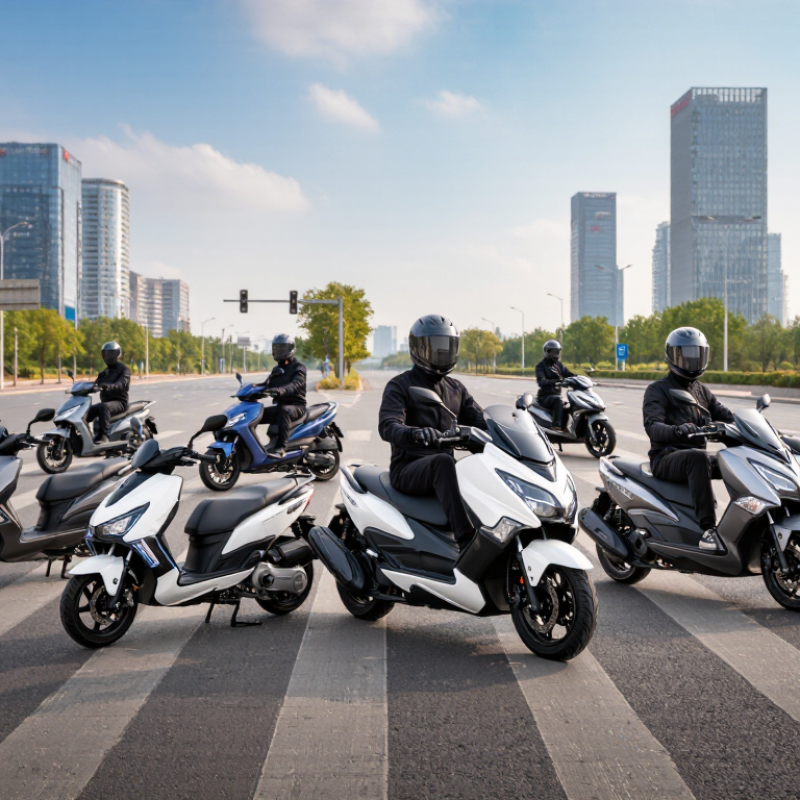
What Defines a Scooter Sport Bike?
What defines a scooter sport bike? It is not simply a scooter with sharper paint. Usually, it combines a step-through chassis, automatic transmission, compact bodywork, and a forward-leaning riding position. Many models use larger wheels, firmer suspension, stronger brakes, and engine output tuned for quick urban acceleration. The category remains flexible, however. Some designs look sporty but lack the cornering hardware expected by experienced riders. That gray area deserves honest labeling. For a top-ten comparison, assess engineering details rather than styling alone.
Industry data adds useful context. An IIHS analysis linked anti-lock braking systems with a 22% lower fatal crash rate among comparable motorcycles. The finding covers motorcycles broadly, not scooter sport bikes alone. Still, it supports prioritizing controllable braking over aggressive styling. The 2024 Global Market Insights scooter market report identifies urban commuting and fuel efficiency as major growth drivers. That suggests a genuine sport scooter must remain practical, not merely fast-looking. In real road tests, low-speed balance, throttle smoothness, and heat management often matter more than peak horsepower.
Tips: Check wheel diameter, brake hardware, suspension travel, seat reach, and wet weight. Test the throttle below 30 km/h. It reveals CVT tuning quickly. Read independent test measurements, not brochure claims. Riders often overvalue acceleration. I did too, once. A lighter scooter may feel faster through tight streets, even with less power. Confirm that the riding position leaves relaxed wrists and clear mirror visibility. Sport styling should never reduce daily control.
What Are the Top 10 Scooter Sport Bike Types? - What Defines a Scooter Sport Bike?
Scooter sport bikes combine automatic transmission, step-through practicality, and performance-oriented styling or handling. Specifications vary by model and market.
| No. | Scooter Sport Bike Type | Typical Engine Range | Common Wheel Size | Defining Features | Sport-Oriented Elements | Best Suited For |
|---|---|---|---|---|---|---|
| 1 | Urban Sport Scooter | 125–200 cc | 12–15 in | Compact step-through chassis, automatic CVT, under-seat storage, and upright ergonomics. | Firm suspension settings, responsive steering, disc brakes, and aggressive bodywork. | Daily city commuting and short recreational rides. |
| 2 | Maxi-Sport Scooter | 250–650 cc | 14–16 in | Large automatic scooter with a substantial frame, wind protection, and two-up capability. | Higher output, strong braking systems, adjustable suspension, and stable high-speed handling. | Commuting, highway travel, and long-distance touring. |
| 3 | Performance Sport Scooter | 150–400 cc | 13–15 in | Performance-focused engine tuning, lightweight construction, and a low, forward-biased riding position. | Quick acceleration, high cornering clearance, sporty tires, and upgraded braking hardware. | Riders seeking agile handling and faster urban performance. |
| 4 | Sport-Touring Scooter | 250–650 cc | 14–16 in | A blend of automatic convenience, weather protection, storage, and long-range comfort. | Aerodynamic fairings, stable chassis geometry, strong mid-range power, and effective windscreens. | Weekend trips, touring, and all-weather commuting. |
| 5 | Lightweight Racing-Style Scooter | 50–125 cc | 10–13 in | Small, light automatic chassis with full or partial aerodynamic panels. | Low mass, rapid steering response, sporty riding position, and race-inspired graphics or fairings. | Beginners, city riders, and short-distance recreational use. |
| 6 | Adventure-Sport Scooter | 150–400 cc | 14–16 in | Step-through scooter layout with increased ground clearance, protective trim, and versatile tires. | Longer-travel suspension, strong low-speed control, and durable braking components. | Mixed pavement, gravel roads, and practical exploration. |
| 7 | Electric Sport Scooter | Equivalent to approximately 50–300 cc | 10–16 in | Battery-powered drivetrain, twist-and-go operation, regenerative braking on some designs, and low routine maintenance. | Instant motor response, centralized battery mass, selectable ride modes, and quiet acceleration. | Urban mobility and riders prioritizing quiet, low-emission transport. |
| 8 | Three-Wheel Sport Scooter | 300–600 cc | 12–15 in | Two front wheels or two rear wheels, automatic transmission, and a wider stance than a conventional scooter. | Enhanced front-end grip, leaning suspension systems on some designs, and strong braking stability. | Urban riders wanting additional standing stability and touring ability. |
| 9 | Retro Sport Scooter | 50–300 cc | 10–14 in | Classic-inspired bodywork, step-through access, simple controls, and modern automatic mechanical systems. | Light steering, responsive acceleration, compact dimensions, and upgraded disc braking on many models. | Style-conscious commuters and relaxed recreational riders. |
| 10 | Track-Inspired Scooter | 125–400 cc | 12–15 in | Road-legal scooter platform influenced by circuit design, with aerodynamic panels and a focused cockpit. | Aggressive ergonomics, performance suspension, sticky road tires, high cornering clearance, and powerful brakes. | Experienced riders who value sporty road handling and distinctive design. |
Core definition: A scooter sport bike generally retains scooter essentials—automatic transmission, step-through access, and integrated bodywork—while adding performance-focused power delivery, braking, suspension, tires, aerodynamics, or chassis tuning.
How Scooter Sport Bikes Are Classified
Scooter sport bikes are classified by their engine layout, chassis design, wheel size, and intended riding environment. In real workshop inspections, these details reveal more than appearance. A sharp fairing does not automatically create a performance scooter.
The ten common types include lightweight urban sport scooters, mid-size commuter sport scooters, maxi-sport scooters, high-performance racing scooters, touring sport scooters, adventure scooters, electric sport scooters, three-wheel sport scooters, retro-performance scooters, and track-focused prototypes. Lightweight models usually favor quick steering and easy parking. Maxi-sport designs add stronger frames, larger brakes, and better wind protection. Racing versions reduce comfort to improve acceleration and corner control. Touring types use longer seats, larger storage areas, and steadier suspension. They feel heavier.
Engine size remains useful, but it can mislead. A smaller scooter with responsive fuel control may feel faster in city traffic than a larger model. Electric versions are classified by motor output, battery capacity, cooling method, and riding range. Adventure types usually have taller clearance, stronger wheels, and suspension suited to rougher surfaces. Three-wheel layouts add stability, although they may turn differently from two-wheel designs.
Classification is not perfectly fixed. Some scooters fit two or three categories at once. A touring scooter may also qualify as a maxi-sport model. Riders should compare braking feel, seat height, suspension control, and real-world weight. Specification sheets help, but hands-on testing often exposes uncomfortable ergonomics or vague steering. That part deserves more attention.
The Top 10 Scooter Sport Bike Types
The Top 10 Scooter Sport Bike Types begin with the lightweight urban sport scooter. It feels quick in traffic and responds easily to small steering inputs. The maxi-sport scooter offers stronger acceleration, wider tires, and better wind protection. A sport-touring scooter adds a relaxed seat, larger storage, and stable handling for longer rides. Its extra weight can feel awkward in tight parking spaces.
The GT performance scooter balances daily comfort with sharper suspension. The electric performance scooter delivers instant response and quiet operation, although range changes with speed, temperature, and rider weight. The adventure-style scooter uses longer suspension travel and a taller riding position. It suits uneven roads, but its added height may trouble shorter riders.
The retro-sport scooter combines rounded bodywork with modern brakes and efficient lighting. It looks lively without requiring extreme performance.
The track-inspired scooter focuses on firm suspension, direct steering, and strong chassis feedback. It can feel exciting, though rough pavement exposes every weakness. The underbone sport scooter is narrow, light, and easy to control at low speeds. Its smaller frame may limit comfort during extended trips. The crossover sport scooter blends road manners with mild all-surface ability. Choose carefully.
In real evaluations, I check braking control, tire grip, seat support, visibility, and service access. Numbers alone do not reveal how a scooter behaves on wet streets or steep hills. My ranking is not absolute. A commuter may prefer comfort, while an experienced rider may value sharper feedback. Some models also promise more than their suspension can deliver. That deserves honest scrutiny.
Key Features and Riding Styles of Each Type
Scooter sport bikes differ by chassis, engine response, wheel size, and riding purpose. The ten practical types are commuter step-throughs, maxi-scooters, sport scooters, touring scooters, adventure scooters, retro scooters, electric urban scooters, leaning three-wheelers, dual-purpose scooters, and track-focused racing scooters. Each creates a different relationship with traffic and road surface.
Commuter models prioritize low weight, storage, and easy, upright control. Maxi-scooters add larger engines, wind protection, and relaxed highway stability. Sport scooters use firmer suspension, sharper steering, and stronger braking for quick corner exits. Touring scooters favor broad seats, tall screens, and luggage capacity over aggressive lean angles.
Adventure and dual-purpose versions use longer suspension travel, stronger wheels, and standing-friendly ergonomics. Retro designs trade some outright performance for simple controls and a calmer pace. Electric urban scooters deliver quiet acceleration and low-speed precision, although range falls noticeably in cold weather. Leaning three-wheelers offer extra front-end stability, but their wider stance changes cornering habits. Racing scooters feel light and immediate, yet their firm setup can punish rough streets.
The market supports this variety. ACEM’s 2024 registration report recorded about 1.1 million powered two-wheelers across Europe during the first half of the year. Industry forecasts from Grand View Research also project continued growth in electric scooters through the decade. These figures show demand, not guaranteed quality. Real-world testing matters more than a specification sheet. A maxi-scooter may feel oversized in a crowded lane. An electric model may suit a short commute perfectly, then disappoint on a long, cold ride. I have found that tire feedback, seat height, and brake feel often matter more than advertised speed. Classification remains imperfect. Some scooters fit two categories at once.
How to Choose the Right Scooter Sport Bike
Choosing the right scooter sport bike starts with your daily route, not its appearance. A lightweight urban scooter suits short commutes and narrow streets. A maxi scooter offers stronger wind protection and storage for longer rides. Electric models work well when charging is convenient. Retro, touring, adventure, performance, step-through, off-road, and hybrid designs each serve different needs.
During test rides, check your reach to the handlebars and the ground. Both feet should touch comfortably at stops. Roll the scooter slowly through a tight turn. It should feel balanced, not heavy or nervous. Test the brake levers with two fingers. The controls must respond smoothly. I once chose a sporty model that looked perfect, but its firm seat became uncomfortable after forty minutes. That mistake changed my buying method.
Review engine size, battery range, suspension travel, tire width, and storage space. Ask a qualified dealer about service intervals and replacement-part availability. Read the owner’s manual before comparing claimed performance figures. Wet roads can expose poor tire grip and weak lighting. Protective clothing, a certified helmet, gloves, and visible riding gear improve everyday safety. Leave room in your budget for maintenance, insurance, and practical accessories. A fast scooter may impress briefly, but predictable handling matters more in traffic. Your ideal choice might feel slightly boring during a showroom visit. That can be a good sign.