5 Best Ways to Move My Shipping Container?
Moving a shipping container looks simple until weight, access, permits, and equipment meet a narrow driveway. If you need to move my shipping container, the safest choice begins with a site inspection, not a truck booking. A 20-foot container commonly weighs about 5,000 pounds empty, while a 40-foot unit may exceed 8,000 pounds. Confirm the actual tare weight on its identification plate.
The wider logistics picture matters. UNCTAD’s Review of Maritime Transport 2024 reports that maritime shipping carries over 80% of global merchandise trade. That scale depends on reliable intermodal transfers between ships, railways, warehouses, and roads. The World Bank’s Logistics Performance Index 2023 also evaluates infrastructure, tracking, logistics competence, and delivery timeliness across 139 economies. Those measures explain why a local move can still require professional planning.
This guide examines five practical methods: a tilt-bed trailer, a chassis truck, a side-loader, a crane-assisted move, and rail or multimodal transport. Each method fits different distances, container weights, ground conditions, and delivery deadlines. A side-loader may place a box neatly beside a driveway, but overhead wires can make that option unsafe. A crane offers reach, yet it needs firm ground and adequate clearance.
Small details matter most. Check turning space, soil strength, overhead obstacles, container contents, and door access. Loaded containers require verified weight information under SOLAS requirements. Costs also change quickly with fuel, waiting time, permits, and equipment availability. The honest limitation is that no single method is always best. A cheaper quote may become expensive after one failed delivery attempt. Professional advice helps, but the final site measurements still deserve careful scrutiny.
Assess the Container’s Size, Weight, and Destination
Moving a shipping container starts with three measurements: size, weight, and destination. Record the external dimensions, tare weight, and cargo weight from the plate and loading notes. Do not guess. A few hundred extra kilograms can change the required equipment. Check whether the container is empty, partly loaded, or fully packed. Loose furniture may shift during lifting. I have seen doors strain when cargo moved against them. That detail matters. Inspect the corner castings, floor, doors, and visible rust before booking transport. Take clear photographs. They help resolve disagreements later. Measure gates, turns, overhead wires, bridges, and the final placement area. A container may fit the driveway but fail at the last corner.
Your destination usually determines the safest moving method. Common options include a tilt-bed trailer, flatbed trailer, side-loader, crane truck, or specialized container forklift. A short, accessible route may suit a tilt-bed trailer. Heavy units often need lifting equipment and firm ground. Narrow access can require a side-loader or temporary obstacle removal. Ask the carrier about axle limits, turning space, ground-bearing requirements, and unloading clearance. Provide the exact address, not only the postal code. Confirm local permits and site rules before dispatch. Allow room for error. My earlier mistake was measuring the gate but ignoring the trailer’s turning arc. The move was delayed. A written plan should list dimensions, total weight, route restrictions, lifting points, weather limits, and site responsibilities. Recheck the weight after packing. Waterlogged materials can quietly change the load.
Choose the Right Moving Method for Your Container
5 Best Ways to Move My Shipping Container?
Choose the Right Moving Method for Your Container
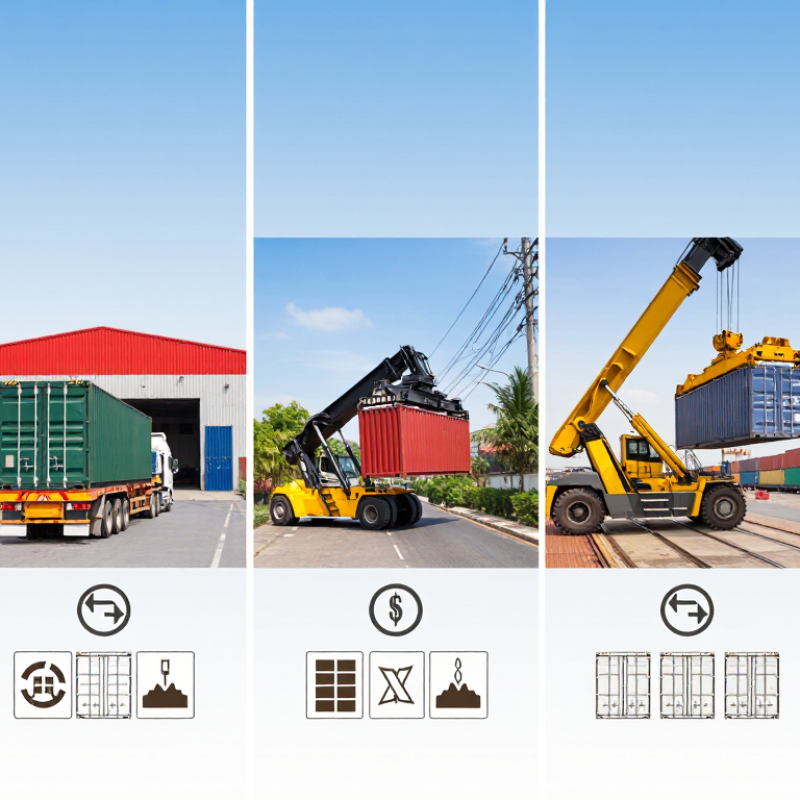
In my field experience, the right method depends on weight, ground conditions, and site access. A tilt-bed trailer works well when the container can slide onto a prepared, level pad. It needs clear rear access and enough turning space. A flatbed trailer or container chassis suits longer road moves. Loading may require a crane, reach stacker, or suitable forklift. A side-loader can place the container beside a narrow driveway. This method needs firm ground and extra operating width. Measure gates, overhead cables, slopes, and the container’s loaded weight before booking equipment. Small details matter.
A crane truck is useful when the container must be lifted over fences, walls, or landscaping. It requires accurate weight information and a stable setup area. A specialized heavy-duty forklift can move containers across short distances on strong, level surfaces. Standard warehouse forklifts are usually unsuitable. They may tip or damage the container. I once underestimated turning space on a compact site. The plan needed changing. That mistake taught me to inspect the route in person, not only rely on photos. Ask a qualified hauler for a site assessment, equipment limits, ground protection, and a clear loading plan. Weather can also change the safest option.
Prepare the Container and Site for Safe Handling
Moving a shipping container safely starts before any lifting equipment arrives.
Inspect the steel walls, corner castings, doors, floor, and locking bars. Remove loose cargo, shelving, and moisture-damaged materials. Even a small item can shift when the container tilts. Keep the weight low and distribute it evenly. Do not rely on a quick visual check. A bent corner or weakened floor may need professional assessment. Record photos, dimensions, and approximate weight before requesting a handling plan.
Prepare a firm, level route from the container to the loading point.
Clear branches, wires, mud, loose gravel, parked vehicles, and narrow turns. Measure gates, overhead clearance, and ground width. The route must support the combined load of the container and lifting equipment. Place barriers around the work area, and keep people away from suspended loads. Confirm communication signals with the operator before movement begins. Hand gestures can fail in wind or noise, so simple agreed commands matter.
Choose handling equipment based on the container’s condition, weight, access, and ground strength.
A qualified operator should inspect the site and select suitable lifting points. Never improvise with damaged chains, uneven supports, or unverified attachment points. I have seen preparation rushed because the container looked empty. That assumption was wrong; hidden equipment added unexpected weight. Recheck the plan after rain, loading changes, or site damage. Small delays are cheaper than a preventable shift.
Arrange Permits, Equipment, and Professional Transport
Moving a shipping container safely depends on permits, suitable equipment, and trained transport crews. A rushed plan can damage roads, property, or the container itself.
Confirm local transport permits before scheduling pickup. Requirements may cover vehicle weight, road access, overhead cables, and temporary street use. A route survey helps identify narrow turns, soft ground, low bridges, and steep driveways. Measure twice.
Choose equipment based on the container’s size and location. A tilt-bed truck suits many ground-level moves, while a crane truck may handle restricted sites. Professional operators should inspect lifting points and confirm the ground can support stabilizers. Safety comes first.
Use a qualified transport company with documented insurance, trained drivers, and experience handling containers. Ask for a written plan covering loading, securing, travel, unloading, and unexpected delays. Containers should be checked for structural damage before movement. Doors must remain closed and secured during transit.
Prepare the destination before the truck arrives. Clear parked vehicles, trim branches, and create a stable placement area with suitable supports. Delivery staff should confirm level positioning and inspect the container afterward. Take photos of the condition before loading and after placement.
Weather can change the plan. Strong wind, heavy rain, or poor visibility may make lifting unsafe. I have seen schedules become too tight because access measurements were assumed rather than verified. A short delay is usually better than forcing a difficult move. Get every detail in writing.