What Are the Top China Flatbed Loads for Global Buyers?
Global buyers rarely ask for “the biggest” flatbed loads alone. They need loads that match local construction cycles, port capacity, road limits, and unloading equipment. This guide examines the China flatbed loads most often considered for international purchasing, including steel structures, solar mounting systems, agricultural machinery, construction equipment, timber products, and oversized industrial components.
Dean Croke, a longtime freight-market analyst, describes the central challenge clearly: “Flatbed freight rewards preparation because every exposed load creates another question about securing, weather, and delivery.” His point reflects daily shipping realities. A steel frame may leave Ningbo in a secure bundle, then face rain, crane delays, or a narrow final-mile road. A machine can fit the trailer but still fail the route plan. Small details matter.
The strongest flatbed loads usually combine steady demand with manageable handling requirements. Buyers should compare dimensions, weight distribution, packaging, lashing points, tarpaulin needs, and destination unloading methods. Port-to-site distance also changes the true cost. A cheaper factory price may lose its advantage after special equipment, storage, or route planning.
This article is practical, not absolute. Demand changes quickly. Freight rates change faster. Some products look ideal on paper but create avoidable delays in real operations. That weakness deserves attention. Careful buyers should verify supplier records, product specifications, export documentation, cargo insurance, and carrier experience before booking.
The goal is not to promote one product category. It is to identify reliable opportunities and expose the assumptions behind them. Clear measurements help. Real delivery experience helps more.
China Flatbed Cargo Scope: China’s 2023 Goods Exports Exceeded US$3.38 Trillion
China’s 2023 goods exports exceeded US$3.38 trillion, showing the scale of its manufacturing and logistics network. This figure covers all goods, not flatbed cargo alone. Still, it signals strong supply depth for global buyers seeking oversized or heavy shipments.
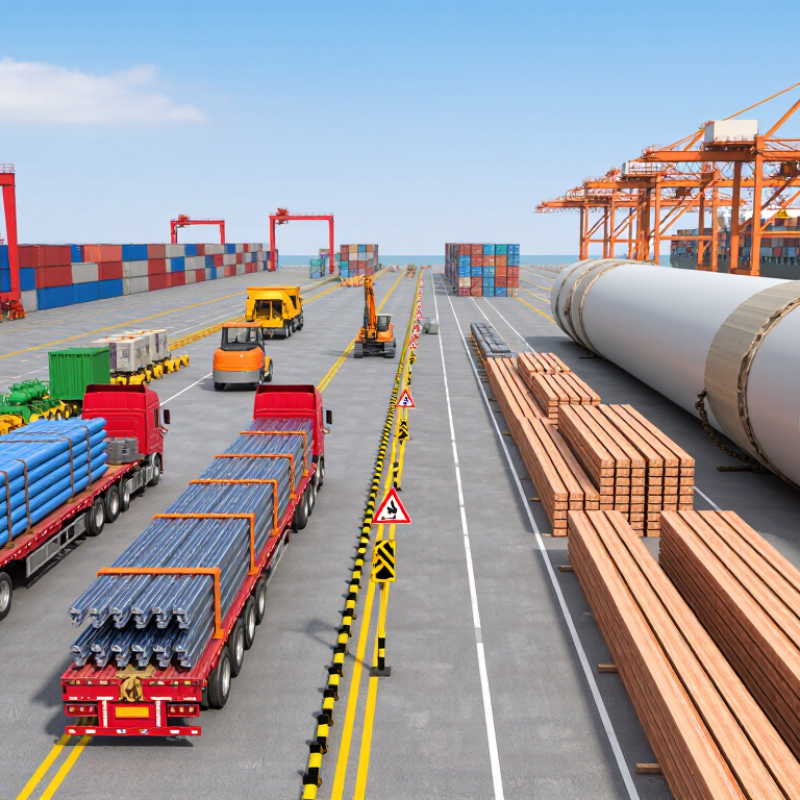
Common China flatbed loads include steel structures, industrial machinery, construction equipment, pipes, prefabricated frames, and large agricultural units. Steel beams may extend across a trailer deck, while machinery often arrives crated with marked lifting points. These details affect loading time, port handling, and inland delivery costs. Buyers should verify cargo dimensions before requesting a freight quote.
Weight matters. So does shape.
Experienced shippers check axle limits, center of gravity, lashing points, and route restrictions before dispatch. Chains, edge protectors, timber blocks, and weather-resistant covers can reduce movement and exposure during transit. Oversized cargo may require route surveys, special permits, escort vehicles, or staged delivery. Requirements vary by origin, destination, and carrier equipment. Packing quality is not always consistent, even when factory output is excellent. That weakness deserves inspection, photographs, and written loading records. Cargo descriptions should also match commercial documents and customs declarations. Clear measurements, verified weights, and realistic delivery terms make flatbed sourcing more reliable.
Payload Planning: 20–40-Foot Platforms and Typical 30–40-Tonne Capacity
What Are the Top China Flatbed Loads for Global Buyers?
Payload Planning: 20–40-Foot Platforms and Typical 30–40-Tonne Capacity
China’s flatbed platforms commonly support machinery, steel structures, construction materials, and agricultural equipment. Platform length matters when cargo extends beyond standard footprints. A 20-foot platform suits compact, dense loads. A 40-foot platform provides more deck space for long frames and bundled materials. Typical rated capacity may reach 30–40 tonnes, but this figure is not automatically usable payload. Planners must subtract the trailer’s tare weight and consider axle limits, road restrictions, and loading equipment.
Weight distribution deserves close attention. Heavy items should sit near the platform’s center, with sufficient clearance from the axles and edge rails. Use certified lifting points where available, then check the center of gravity before securing the cargo. Chains, binders, timber blocks, and anti-slip materials should match the cargo weight and journey conditions. Small errors become expensive.
Measure twice.
Cargo dimensions can change the equipment choice. A long steel frame may require a 40-foot deck, while a dense machine may fit a shorter platform but exceed local axle limits. Export documents should state gross weight, dimensions, lifting points, and securing requirements clearly. Road rules differ between countries, so a 35-tonne load may be acceptable at origin but restricted after arrival. A neat plan can still fail. Even experienced teams should recheck tare weight, clearance, and tie-down angles before dispatch.
Compliance Check: China’s 49-Tonne Six-Axle Limit Versus the EU’s 40-Tonne Standard
China’s popular flatbed loads include fabricated steel, construction machinery, stone products, and oversized industrial frames. These shipments often need open access for cranes and side loading. A six-axle Chinese vehicle may legally reach 49 tonnes gross weight under GB 1589-2016. Gross weight includes the tractor, trailer, fuel, equipment, and cargo. Payload is much lower.
The EU baseline is different. Directive 96/53/EC generally limits a standard articulated vehicle to 40 tonnes. Certain intermodal operations may reach 44 tonnes, subject to conditions. This creates a nine-tonne gap, or about 22.5 percent.
A Chinese load planned at 49 tonnes cannot simply cross into Europe unchanged. The forwarder must check axle spacing, bridge limits, dimensions, and the destination country’s permit rules. Uneven steel coils can also overload one axle.
The scale is significant. Eurostat recorded approximately 1.9 trillion tonne-kilometres of EU road freight in 2023. Small compliance errors can therefore affect many supply chains. In practice, I would request certified weights before booking the flatbed. A weighbridge ticket helps. So does a loading diagram showing axle positions. A spreadsheet can still mislead. The trailer tare weight may be outdated, or crane accessories may be forgotten. Rechecking the cargo after packing is slower, but cheaper than unloading at a border. China’s 49-tonne allowance is useful for domestic efficiency; EU delivery requires a separate weight design.
Global Sourcing Metrics: Compare Cost, Lead Time, Damage Risk, and Incoterms 2020
Top China flatbed loads for global buyers include structural steel, machinery, stone slabs, pipes, and oversized fabricated equipment. These cargoes need open-deck access and careful blocking. China’s mechanical and electrical exports represented about 59% of total exports in 2024, according to China Customs data. That volume supports strong supplier capacity, but not every factory manages export packing well.
Compare landed cost, not only the factory quote. A flatbed load may reduce packaging costs, yet wooden blocking, tarps, lifting, and port handling add expense. The World Bank’s 2023 Logistics Performance Index gave China an overall score of 3.7, showing strong logistics capability with uneven local execution. A practical sourcing sheet should record pickup distance, loading hours, transshipment count, and cargo value. Damage risk rises when stone edges lack corner protection or machinery shifts after rain. Small details matter.
Lead time should include production, inland transport, customs clearance, and ocean transit. UNCTAD’s Review of Maritime Transport 2024 notes that maritime shipping carries over 80% of global trade by volume, while route disruptions can increase delays and freight volatility. Incoterms 2020 must define risk clearly. FCA often gives buyers better control over main carriage. FOB may suit port-loaded cargo, but it can obscure inland costs. DAP offers delivery convenience, while DDP requires careful tax and import compliance checks. I would not promise a fixed lead time without recent lane data. It sounds efficient, but it can be misleading.
Top China Flatbed Loads for Global Buyers
Global sourcing benchmarks comparing indicative export cost, transit lead time, and cargo damage risk.
Cost basis
Indicative export value and inland handling cost in USD per metric ton, excluding ocean freight, duties, and taxes.
Lead time
Typical factory-to-main-port planning time for standard export preparation and inland movement.
Damage risk
Approximate planning estimate for visible cargo damage when loading, lashing, and weather protection are properly managed.
Steel sections and pipes generally offer the lowest cost per ton, while prefabricated structures and construction equipment require more specialized handling. For Incoterms 2020, FCA is commonly used for factory or terminal handover, while FOB, CFR, or CIF may be selected when the seller arranges delivery to the export port or ocean freight. Actual quotations vary by specification, season, destination, route, packing, and cargo dimensions.