What Are the Top China Flatbed Truck Manufacturers?

Choosing a reliable flatbed truck manufacturer in China requires more than comparing prices. The real question is simple: which builder can match payload, road conditions, service access, and long-term operating costs?

Mike Roeth, an authority on commercial-fleet efficiency, often emphasizes, “You have to start with the job.” That advice fits flatbed trucks especially well. A construction hauler may need a reinforced deck, strong suspension, and durable tie-down points. A regional distributor may value fuel economy, maneuverability, and easy maintenance instead. The same truck cannot serve every route equally well.

This guide examines leading Chinese manufacturers, including Sinotruk, Shacman, FAW Jiefang, Foton, JAC, and Dongfeng. It considers chassis strength, engine choices, deck design, cab comfort, export support, parts availability, and documented fleet experience. Factory reputation matters. So does the dealer standing beside a roadside workshop at dawn.

Some manufacturers excel in heavy-duty applications. Others offer better value for medium-duty transport. Specifications can also change by market, axle layout, and customization. That makes simple rankings imperfect. They can mislead buyers who only compare horsepower or sticker price.

A dependable flatbed truck should fit the work before it looks impressive. Buyers should verify local service coverage, warranty terms, load ratings, and replacement-part supply. Small details often decide uptime. This comparison aims to make those details easier to judge, while recognizing that no manufacturer is ideal for every operation.
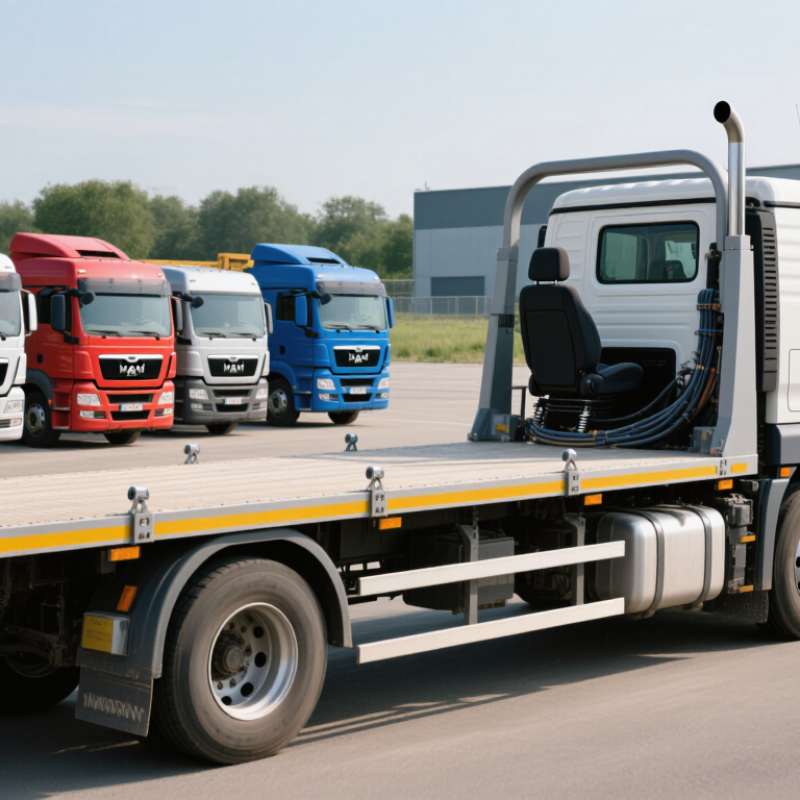
What Are the Top China Flatbed Truck Manufacturers?

What Defines a Leading China Flatbed Truck Manufacturer?

A leading China flatbed truck manufacturer is defined by engineering discipline, not production volume alone. Its design team should match frame strength, axle capacity, suspension, and deck size to real working conditions. A truck carrying steel coils needs different reinforcement from one transporting construction materials. Look for measurable details, such as frame thickness, welding quality, load distribution, and corrosion protection. Factory experience matters too. During a workshop visit, buyers should inspect weld seams, hydraulic lines, paint coverage, and assembly records. Small defects can become expensive problems later.

Tips: Request test reports, material certificates, and clear payload calculations. Confirm whether the stated capacity includes the driver, fuel, and equipment. Ask for photos of completed units, not only computer drawings. Check spare-parts availability and technician response times before placing an order.

Reliable manufacturers also provide traceable quality control. Each major component should have inspection records and a defined acceptance standard. Strong suppliers discuss destination-market requirements openly. They explain lighting, braking, dimensions, and documentation without making vague promises. Customization should be practical, not decorative. A reinforced deck, removable side panels, or a stronger headboard may improve daily productivity. However, excessive modifications can reduce balance or increase maintenance costs. That point is sometimes overlooked. Buyers should compare warranty terms, delivery schedules, service training, and long-term operating data. The best choice may not be the cheapest quotation. It is the manufacturer that can explain every technical decision clearly and support the truck after delivery.

How China’s Flatbed Truck Manufacturing Industry Is Structured

China’s flatbed truck industry is not a single block. It is a layered manufacturing network. Large vehicle groups usually handle chassis integration, testing, and nationwide distribution. Specialized factories focus on flatbed bodies, hydraulic systems, axles, or suspension parts. Smaller workshops often provide low-volume customization. This structure helps buyers compare capacity, price, and technical support.

Regional clusters shape the market. Northern factories often serve construction and heavy-duty transport demand. Coastal manufacturers benefit from ports, mature suppliers, and export experience. In an experienced sourcing review, factory capability should be checked beyond catalog photos. Inspect welding seams, deck thickness, paint coverage, axle ratings, and electrical routing. Ask for load-test records and production quality documents. These details reveal more than a polished website.

The strongest manufacturers typically offer engineering drawings, traceable components, and clear after-sales procedures. They can adjust deck length, side rails, ramps, suspension, and lighting for different operating conditions. However, the industry is not perfectly consistent. Some suppliers quote quickly but explain tolerances poorly. Others deliver good hardware with weak documentation. Buyers should verify factory ownership, testing methods, spare-parts access, and applicable vehicle regulations before ordering. Small details matter. A missing measurement can delay registration or fleet deployment.

Which Companies Are Notable in China’s Flatbed Truck Market?

China’s flatbed truck market includes several notable manufacturer groups, each serving a different transport need. Large state-linked producers often offer broad model ranges, strong engineering teams, and established dealer networks. Private manufacturers may respond faster to custom requests, especially for construction fleets and regional logistics operators. Their strengths can include flexible wheelbases, reinforced frames, and practical cabin layouts.

A credible manufacturer should show more than attractive catalog photos. During a factory evaluation, inspect welding consistency, frame thickness, axle identification, and paint coverage beneath the chassis. Ask for load-test records, component traceability, and clear maintenance schedules. Experienced suppliers can explain payload limits without vague promises. They also provide parts lists, service contacts, and training for overseas technicians. These details matter when a truck works daily on uneven roads.

Some companies appear impressive but lack consistent after-sales support. That risk deserves attention. A low purchase price may hide longer delivery times or expensive replacement parts. I would compare several production batches, not only one display vehicle. Even strong manufacturers can improve quality control between factories or subcontracted facilities. Buyer feedback should be checked against technical documents and recent inspection results. Practical judgment remains essential.

How to Compare China Flatbed Truck Manufacturers

Comparing China flatbed truck manufacturers requires more than checking the lowest quotation. The China Association of Automobile Manufacturers reported about 4.03 million commercial vehicles sold in 2023. This scale creates many suppliers, but production volume does not automatically prove reliable engineering. Ask for load-test records, chassis specifications, axle ratings, and documented welding procedures. A flatbed carrying steel coils needs different reinforcement from one transporting construction panels.

Inspect the manufacturing process, not only the finished photographs. Look for consistent weld beads, sealed frame joints, drainage holes, and corrosion protection beneath the deck. ISO 9001 certification can indicate controlled processes, but it is not a substitute for independent inspection. Request third-party reports covering braking performance, lighting, suspension, and vehicle dimensions. The United Nations Economic Commission for Europe provides widely used vehicle safety regulations, which can help structure these checks.

Review after-sales support with practical questions. What is the spare-parts response time? Are wiring diagrams and maintenance manuals supplied in clear English? Can the manufacturer provide production videos, serial-number records, and references from similar fleet operators? The World Bank’s 2023 Logistics Performance Index highlights the importance of dependable transport systems, yet uptime is often overlooked during purchasing. I have seen attractive specifications hide weak communication. That mistake is expensive. Compare warranty exclusions, delivery terms, inspection rights, and customization costs in one table. Then verify every important claim independently.

What Are the Top China Flatbed Truck Manufacturers? - How to Compare China Flatbed Truck Manufacturers

Comparison Dimension What to Compare Common China-Market Data or Benchmark Why It Matters Recommended Verification
Vehicle Configuration Drive layout and axle arrangement Common configurations include 4×2, 6×2, 6×4, 8×4, and 10×4 Determines traction, maneuverability, legal load distribution, and operating cost Check the technical specification, axle ratings, and intended road conditions
Rated Payload Permitted cargo capacity rather than marketing capacity Light and medium models commonly cover approximately 1–15 tonnes; heavy models can exceed 15 tonnes Affects revenue per trip, road legality, and component durability Compare curb weight, gross vehicle weight rating, and axle-load limits
Gross Vehicle Weight Maximum permitted total weight of truck, body, passengers, and cargo Typical flatbed categories range from light-duty vehicles below 4.5 tonnes to heavy-duty vehicles above 12 tonnes Influences licensing, route access, bridge restrictions, and operating compliance Request the official vehicle certificate and approved chassis data
Flatbed Platform Deck length, width, height, material, and side-board design Commercial flatbeds are commonly specified from about 4 m to more than 9 m in deck length, depending on chassis class Must match cargo dimensions, loading method, and local road regulations Confirm usable deck dimensions, floor thickness, tie-down points, and allowable load
Engine Output Rated power, torque, displacement, and fuel type Diesel power commonly ranges from roughly 70 kW in light-duty models to over 300 kW in heavy-duty models Higher torque is valuable for heavy loads, gradients, and frequent starts Compare peak torque speed, transmission ratios, and real operating conditions
Emission Compliance Applicable emission standard and after-treatment system China VI requirements apply to relevant new heavy-duty vehicles; systems may include diesel oxidation catalysts, diesel particulate filters, and selective catalytic reduction Determines registration eligibility and access to regulated urban areas Verify the emission certificate, engine model, and local registration requirements
Transmission and Axles Manual or automated manual transmission, axle ratio, and axle capacity Manual gearboxes remain common; automated manual transmissions are increasingly used in medium- and heavy-duty applications Affects fuel economy, driver workload, gradeability, and maintenance needs Ask for gear ratios, gradeability data, service intervals, and parts availability
Safety Equipment Braking, stability, lighting, mirrors, underrun protection, and load restraint Air brakes are widely used on medium- and heavy-duty trucks; electronic safety features depend on vehicle class and specification Improves stopping performance, cargo security, and regulatory compliance Review compliance with applicable Chinese vehicle safety standards and export requirements
Fuel Economy Fuel consumption under a defined payload, speed, and route profile Consumption varies substantially by payload, aerodynamics, axle ratio, road grade, and driving style; no single figure applies to every model Fuel is one of the largest lifetime operating costs Request test conditions instead of comparing unsupported headline figures
Manufacturing Quality Production controls, weld quality, paint system, inspection, and traceability ISO 9001 certification can indicate a documented quality-management system, but it does not by itself guarantee vehicle performance Reduces premature failures, corrosion, and inconsistent assembly quality Request current certificates, inspection records, factory photographs, and sample-unit results
Customization Capability Deck configuration, crane preparation, ramps, toolboxes, side guards, and export specifications Customization is commonly available for body dimensions, suspension, tires, lighting, and cargo restraint systems Allows the truck to fit a specific cargo and operating environment Obtain a signed technical drawing and confirm which changes affect certification
After-Sales Support Spare-parts access, technical support, warranty terms, and repair response Support quality depends on destination country, distributor coverage, parts stock, and the selected chassis components Directly affects uptime and total cost of ownership Confirm warranty exclusions, parts lead times, service locations, and escalation procedures
Export and Documentation Certificate of conformity, commercial invoice, packing list, inspection documents, and shipping terms Documentation requirements vary by destination market and may include local type approval or roadworthiness certification Incomplete documents can delay customs clearance, registration, or delivery Prepare a destination-specific document checklist before placing the order
Total Cost of Ownership Purchase price, freight, duties, fuel, tires, maintenance, repairs, and resale value A lower purchase price may be offset by higher logistics, downtime, parts, or compliance costs Provides a more accurate comparison than purchase price alone Calculate expected cost per kilometre or cost per operating year

Note: Specifications vary by vehicle class, configuration, destination market, and local regulations. Confirm all final values against the official technical documents for the selected vehicle.

What Factors Influence Manufacturer Selection and Purchase Decisions?

Selecting a China flatbed truck manufacturer requires more than comparing purchase prices. The China Association of Automobile Manufacturers reported over 4 million commercial vehicles sold in 2023, showing a highly competitive supply market (CAAM, 2024). That scale can support better component access and production capacity. It can also create confusingly similar specifications.

Payload, deck length, axle configuration, and engine output should match the actual route. A truck carrying steel coils needs different reinforcement from one moving agricultural equipment. Buyers should request verified load tests, braking data, corrosion treatment details, and chassis drawings. The World Bank’s Logistics Performance Index 2023 highlights reliability and service quality as major logistics concerns. After-sales response therefore matters as much as horsepower. Ask about parts availability, technician coverage, warranty exclusions, and average repair time. Small details become expensive delays.

Total cost of ownership deserves closer attention. The International Energy Agency reported that electric truck sales expanded rapidly in China during 2023, but infrastructure and operating conditions still vary widely (IEA, Global EV Outlook 2024). This makes fuel type a route-specific decision, not a trend-following exercise. I would compare five-year fuel, maintenance, tire, financing, and resale costs. Not every spreadsheet is honest enough. Some forecasts assume perfect utilization.

Factory audits can reveal welding consistency, paint thickness, inspection records, and worker training. Independent certification is useful, but it does not replace physical inspection. Buyers should also verify export documentation and destination-market compliance before payment. A low quote may hide adaptation costs. That risk is easy to underestimate.