
China Top 10 Shipping Container Manufacturers
Choosing a shipping container manufacturer is not simply a search for the lowest price. Buyers must compare structural quality, production consistency, customization, delivery capacity, and after-sales support. Small details matter: door seals should sit evenly, corner castings should look sound, and welds deserve close inspection. A low quote may still leave important questions unanswered.
Shipping historian Marc Levinson’s work highlights how standardization helped transform global trade. A fair paraphrase of his central insight is: “Standardization made the shipping container valuable across the supply chain.” This is a paraphrase, not a verbatim quotation. That perspective is useful when comparing manufacturers: dependable dimensions and repeatable construction can matter as much as headline specifications. Yet no single ranking suits every buyer. Requirements differ by cargo, climate, route, and intended service life.
This guide examines ten leading manufacturers through practical criteria, including product range, manufacturing capability, quality controls, and market reach. It also considers where public information may be incomplete. Company claims need checking, and a polished brochure cannot replace a clear specification or a careful inspection. There is room for judgment—and sometimes uncertainty. The goal is to help readers ask better questions before requesting quotations, comparing samples, or placing an order.
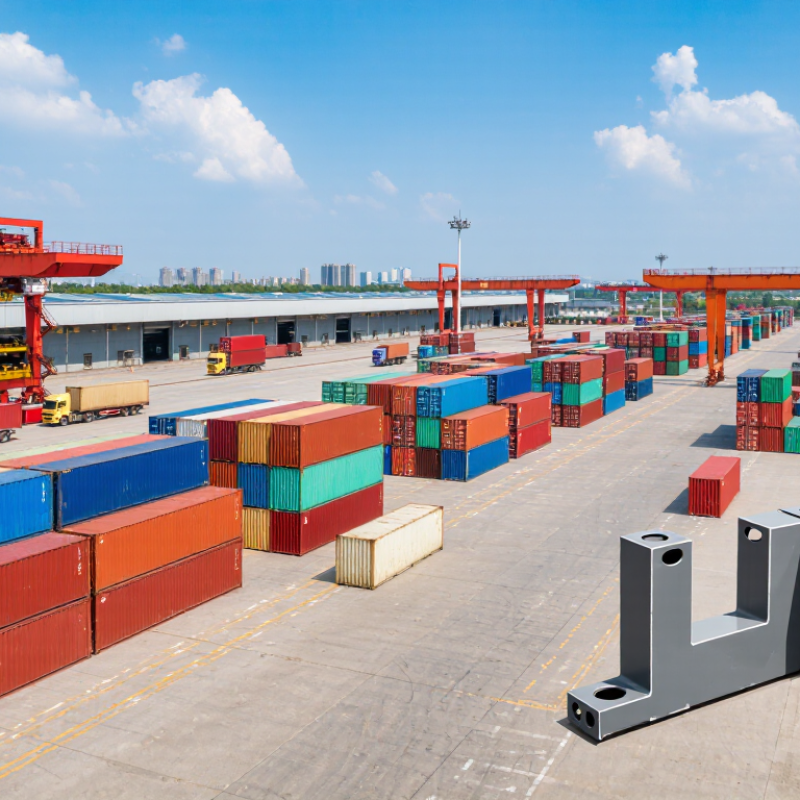
Overview of China’s Shipping Container Manufacturing Industry
China’s shipping container manufacturing industry combines steel processing, component sourcing, welding, coating, and inspection at a large industrial scale. Production sites often benefit from nearby suppliers of steel, flooring, door hardware, and protective coatings. This can shorten delivery times and support high-volume orders, though capacity varies by factory and season.
The work is precise in practical ways. Workers check weld seams, door alignment, corner fittings, and floor condition before a unit leaves the yard. Coating quality matters, too: salt air and repeated handling can expose weak spots quickly. Details matter. Buyers should compare specifications, inspection records, and stated test methods rather than relying on production volume alone. A container that looks sound from the outside may still have poor seals or uneven flooring.
Automation has improved consistency in cutting and welding, while experienced inspectors remain important for catching defects. Manufacturers are also adapting to demand for better corrosion resistance and lower-impact production, but progress is not uniform. Factory output alone tells little about long-term performance. Even a thorough inspection cannot predict every repair after years of hard use; that limitation deserves more attention in purchasing decisions.
| China Top 10 Shipping Container Manufacturers - Overview of China’s Shipping Container Manufacturing Industry | ||
|---|---|---|
| Industry overview by product, standards, specifications, and manufacturing characteristics — no company rankings or brand names | ||
| Industry Dimension | Overview | Relevant Data or Standard |
| 1. Global Manufacturing Role | China is the world’s largest shipping-container manufacturing base. Its factories supply a substantial majority of new containers used in international freight, although the precise share varies by year and source. | Production share is not a fixed figure; it changes with global demand, capacity utilization, and container type. |
| 2. Main Product Types | Manufacturers produce dry freight containers, refrigerated containers, tank containers, open-top containers, and flat-rack containers. | Equipment type is selected according to cargo, handling, ventilation, temperature-control, and loading requirements. |
| 3. Standard 20-Foot Container | A common general-purpose container size used for international cargo transport. | Typical external dimensions: 6.058 m long × 2.438 m wide × 2.591 m high. A 20-foot unit equals 1 TEU. |
| 4. Standard 40-Foot Container | A common general-purpose size with twice the nominal TEU capacity of a 20-foot container. | Typical external dimensions: 12.192 m long × 2.438 m wide × 2.591 m high. A 40-foot unit equals 2 TEU. |
| 5. High-Cube Containers | High-cube containers provide additional internal volume for suitable cargo while retaining the standard external width and length of the corresponding container size. | A common 40-foot high-cube container has an external height of approximately 2.896 m. |
| 6. Common Construction Materials | Many dry freight containers use weathering steel for the main structure and marine-grade plywood or another suitable material for the floor. Materials vary by design and application. | Material selection must account for structural strength, corrosion protection, cargo requirements, and service conditions. |
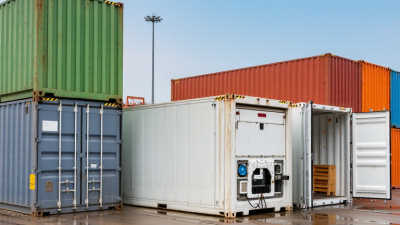
| 7. Refrigerated Containers | Refrigerated containers, often called reefers, use an integrated refrigeration unit to maintain controlled cargo temperatures during transport. | Operating temperature ranges depend on the equipment model and cargo specification; a commonly available range is approximately −30°C to +30°C. |
| 8. International Standards | Container dimensions, ratings, and testing are governed by international standards and safety requirements. | ISO 668 covers classification, dimensions, and ratings; the ISO 1496 series covers specifications and testing for different container types. The CSC sets international safety requirements for containers in transport. |
| 9. Typical Production Stages | Manufacturing commonly includes steel preparation, component fabrication, welding, surface treatment and painting, floor installation, fitting, inspection, and testing. | Processes and inspection plans differ by container type, design, customer specification, and applicable standard. |
| 10. Export and Delivery | Finished containers are commonly moved from manufacturing facilities to ports or logistics hubs for delivery to shipping lines, leasing companies, and other equipment buyers. | Delivery schedules are affected by production lead time, port capacity, vessel availability, and global container demand. |
Related Posts
-

2025 Top Trends in Large Shipping Container Use and Market Growth Data
-

Top 10 Creative Uses for Shipping Containers in Modern Architecture
-
Discover the Best Deals on Large Shipping Containers Today?
-
Top 10 Best Uses for Empty Shipping Containers You Need to Know
-
2026 Best Freight Container Options for Global Buyers?
-
What Are the Best Cargo Shipping Containers in 2026?