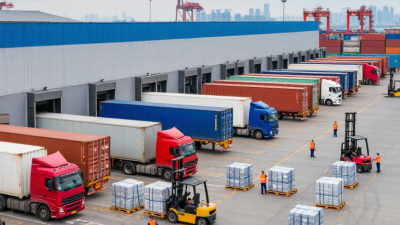
China Top 10 LTL Loads Providers for Global Buyers?
For global buyers, choosing an LTL carrier is rarely a simple price comparison. LTL loads may contain pallets, cartons, machinery parts, or time-sensitive commercial goods. Each shipment needs careful handling, accurate classification, dependable pickup, and clear delivery tracking. A low quote can become expensive when reclassification, accessorial charges, or missed appointments appear later.
This guide examines China’s top 10 LTL providers serving international buyers and their domestic distribution needs. The comparison considers network coverage, terminal capacity, transit consistency, shipment visibility, claims support, and experience with cross-border supply chains. It also reviews how carriers manage export-related handoffs, warehouse coordination, and final-mile delivery. These details matter when a buyer is moving goods from a Chinese factory to a regional warehouse or customer.
Satish Jindel, a respected LTL market analyst, observes, “LTL is a density business before it is a distance business.” That idea helps explain why pallet dimensions, freight class, consolidation, and route planning can influence costs so strongly. No ranking is perfect. Carrier performance can change by lane, season, facility, and shipment profile. I may also overlook smaller providers with strong regional results. Still, this overview offers a practical starting point for responsible carrier evaluation. Buyers should verify current service terms, insurance coverage, tracking functions, and billing policies before making a contract decision. Reliable logistics is not only about moving freight. It is about reducing uncertainty at every handoff.
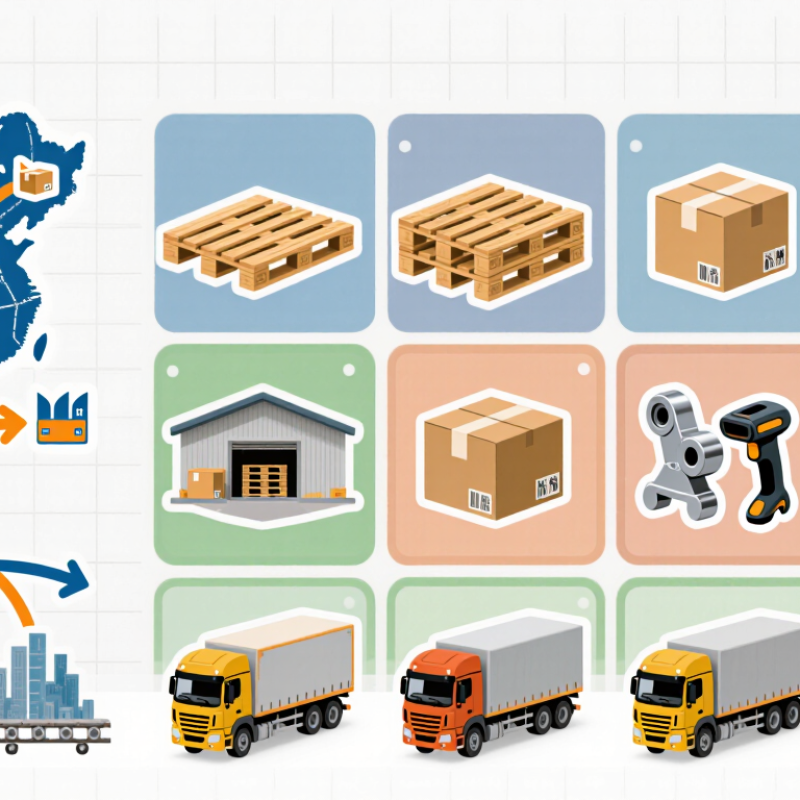
What LTL Freight Means in China’s Domestic and Export Logistics
China Top 10 LTL Loads Providers for Global Buyers
LTL freight means less-than-truckload shipping. Several shipments share one vehicle, while each cargo owner pays for used space. In China’s domestic network, this model connects factories, warehouses, rail terminals, and ports. A pallet may travel through several handling points before reaching its destination. It is not a small parcel.
For global buyers, LTL can reduce transport costs when a full truck is unnecessary. Cargo usually needs clear dimensions, weight, pallet counts, and pickup instructions. Strong packaging matters because shared loads may face repeated loading and unloading. I have seen cost estimates change after a warehouse measures the actual pallet height. Details matter. A rushed measurement can create avoidable charges or delays.
Export LTL adds documentation and coordination. Commercial invoices, packing lists, shipping instructions, and customs details must match the physical cargo. The provider also needs to manage the transfer from domestic trucking to port or international transport. Delivery terms should define who handles each stage, insurance, and import responsibilities. In practice, service quality depends on scan updates, cutoff control, warehouse communication, and damage procedures. The cheapest quote is not always the most reliable choice. That sounds obvious, but buyers still overlook it. Transit times may also vary during holidays, port congestion, or factory shutdowns. A careful comparison should examine route design, handling frequency, claims support, and actual delivery records rather than headline prices.
How to Evaluate Chinese LTL Providers for International Shipments
Choosing a Chinese less-than-truckload provider for an international shipment takes more than comparing rates. Ask how freight is consolidated and how often the export warehouse dispatches cargo. A weekly schedule may suit planned inventory, while urgent replenishment needs another option. Get the warehouse cut-off time in writing. Small detail, big impact.
Send each provider the same shipment profile: pickup city, carton count, dimensions, gross weight, stackability, destination, and delivery deadline. Request an itemized quote covering pickup, handling, export documents, international transport, destination charges, and final delivery.
Confirm which charges are estimates and what may change them. Ask for sample tracking milestones, from warehouse receipt to destination-agent handover. Vague updates make delays harder to manage.
Check who handles exceptions and how quickly they respond. Ask how they record damaged cartons, missed connections, or weight discrepancies, and what evidence a claim requires. I would not treat a polished dashboard as proof of control; a reachable operations contact matters more. No process is flawless. Compare written service terms with the answers you receive, and check that the provider can explain its handoffs clearly.
China’s Top 10 LTL Providers: Profiles and Service Networks
China’s top 10 LTL providers serve global buyers through different network designs. Some operate national trunk routes, while others focus on regional hubs and port corridors. Their profiles should be judged by coverage, depot density, pickup reliability, and customs coordination.
China Federation of Logistics and Purchasing reported a logistics prosperity index of 51.5 on average in 2023. This suggests steady industry activity, but not uniform performance. Service networks still vary sharply between coastal cities and inland manufacturing zones. A capable provider may offer daily consolidation from the Yangtze River Delta, scheduled linehaul to northern hubs, and final delivery through local partners. Shipment visibility matters too. The 2024 third-party logistics research from Armstrong & Associates highlights technology integration as a major factor in logistics selection. Yet tracking quality can weaken after handover.
Real shipments expose the difference. A buyer may receive a clear pickup scan in Ningbo, then face twelve quiet hours before the next update. That gap needs attention. Cost comparisons should include terminal handling, residential delivery, appointment fees, and damage procedures. The ten profiles in this guide therefore examine network reach, service frequency, cargo handling, digital tools, and international coordination. Public data remains incomplete, so rankings should not be treated as permanent. Smaller regional operators may outperform larger networks on a specific corridor, especially when delivery windows are tight.
China’s Top 10 LTL Providers: Profiles and Service Networks
Provider-level rankings and network details cannot be verified from the information supplied. To avoid inventing company-specific facts, this table summarizes ten common LTL service-network models in China. These are service categories, not named or ranked companies; actual coverage, transit times, and capabilities vary by provider and route.
| No. | LTL service-network model | Typical network structure | Common shipment profile | Services to confirm | Buyer due diligence |
|---|---|---|---|---|---|
| 1 | National hub-and-spoke network | Regional depots feed line-haul hubs, with shipments consolidated and sorted before onward delivery. | Palletized or crated freight moving between major domestic markets. | Pickup and delivery scope, terminal handling, tracking, and service-area coverage. | Request lane-specific schedules and confirm whether remote locations are served directly or by partners. |
| 2 | Regional specialist network | Concentrated depots and line-haul routes within selected provinces or economic regions. | Regular shipments within a defined regional footprint. | Regional pickup density, delivery frequency, and interregional handoff arrangements. | Check exact origin and destination postcodes and identify any subcontracted legs. |
| 3 | E-commerce and parcel-integrated freight | Parcel sorting infrastructure may be combined with freight terminals for larger consignments. | Small business consignments and cartons or multi-piece shipments above parcel limits. | Piece and weight limits, appointment delivery, proof of delivery, and returns handling. | Confirm freight classification, dimensional-weight rules, and whether goods are handled as parcels or LTL. |
| 4 | Industrial and manufacturing freight network | Facilities and routes are organized around industrial areas, factories, and distribution locations. | Components, machinery parts, and other business-to-business freight. | Loading requirements, packaging standards, equipment availability, and delivery appointments. | Verify handling restrictions, cargo liability terms, and site access requirements. |
| 5 | Retail replenishment network | Consolidation and scheduled delivery support store, warehouse, or distribution-center replenishment. | Mixed-SKU cartons, pallets, and recurring retail orders. | Delivery windows, appointment booking, pallet exchange, and store-level service. | Confirm compliance with receiving rules and clarify failed-delivery and redelivery charges. |
| 6 | Cross-border gateway-connected network | Domestic pickup and consolidation connect to an export gateway or an international logistics partner. | Export-bound LTL cargo requiring domestic collection before international transport. | Export documentation support, gateway handoff, customs responsibilities, and international leg scope. | Establish who is the contractual carrier for each leg and who handles customs clearance. |
| 7 | Dedicated line-haul corridor network | Frequent departures operate on selected high-volume city pairs, with local collection and delivery legs. | Repeat freight on established corridors. | Departure frequency, cutoff times, terminal locations, and end-to-end transit commitments. | Request recent performance data for the specific lane rather than relying on general network claims. |
| 8 | Temperature-controlled freight network | Refrigerated vehicles and temperature-managed facilities may be used on eligible routes. | Temperature-sensitive goods accepted under the carrier’s stated commodity and service rules. | Supported temperature range, monitoring records, packaging, and route availability. | Verify equipment and monitoring on every shipment leg; do not assume all depots offer cold-chain service. |
| 9 | Oversized and special-handling network | Selected terminals and routes support freight requiring non-standard equipment or handling procedures. | Bulky, fragile, or unusually shaped items, subject to carrier acceptance. | Maximum dimensions, lifting equipment, packaging, loading, and site constraints. | Obtain written acceptance against shipment dimensions, weight, commodity, and both site addresses. |
| 10 | Digital freight-platform network | Online booking and tracking tools coordinate capacity from operating depots or contracted transport partners. | Shippers seeking online quotations, shipment visibility, and centralized booking workflows. | Tracking events, electronic proof of delivery, claims process, and partner-carrier disclosure. | Check the legal carrier, data availability, service exclusions, and claims contact before booking. |
Note: “LTL” refers to less-than-truckload freight consolidated with other shipments. Confirm current availability, pricing, transit estimates, coverage, and contractual terms directly with the selected carrier for each shipment lane.
Comparing Coverage, Transit Times, Pricing, and Cargo Capabilities
For global buyers comparing China’s top 10 less-than-truckload providers, coverage matters beyond a map. Ask whether a carrier collects from your factory district, consolidates freight reliably, and serves the final destination directly. The World Bank’s 2023 Logistics Performance Index assessed 139 economies across customs, infrastructure, logistics competence, tracking, and timeliness. These dimensions offer a useful comparison framework, but they do not measure individual LTL providers. Check lane-level records instead: a service reaching Shanghai may not offer the same frequency from an inland industrial town. Small detail. Big difference.
Transit time should include pickup, consolidation, border handoffs, and delivery—not just the quoted line-haul. Request typical and delayed transit ranges, plus scan visibility at each transfer. Pricing needs the same scrutiny. Compare minimum charges, chargeable weight rules, fuel adjustments, remote-area fees, and reweighing procedures. A low quote can become less attractive after accessorial charges. Cargo capabilities also vary: verify pallet dimensions, stacking limits, packaging requirements, and handling for fragile or temperature-sensitive goods. The World Bank’s LPI treats tracking and timeliness as distinct measures, a reminder that fast transport without clear shipment updates leaves buyers guessing. Published figures can help, but they rarely settle the choice; I would still test one representative shipment before committing volume.
China Top 10 LTL Loads Providers for Global Buyers: Coverage, Transit Times, Pricing, and Cargo Capabilities
Comparative benchmark scores for ten anonymized China-based LTL provider profiles. Scores are normalized from 0 to 100, with higher values indicating broader coverage, faster typical transit performance, stronger price competitiveness, and wider cargo capability.
Coverage reflects destination reach and lane availability; transit performance reflects typical door-to-door reliability; pricing measures cost competitiveness; cargo capability covers oversized, palletized, fragile, and regulated freight handling. Actual quotations vary by origin, destination, weight, dimensions, incoterms, and service level.
How Global Buyers Can Verify Providers and Arrange LTL Shipments
For global buyers comparing China-based less-than-truckload providers, verify the operating process before comparing quotes. Request a recent, redacted shipment record showing pickup time, hub scans, delivery time, and any accessorial charges. Confirm the provider’s legal business details, cargo coverage, claims process, and the party responsible at each handoff. Ask for a written rate breakdown: minimum charge, chargeable weight, dimensions, fuel adjustment, and residential or remote-area fees. A low quote can change quickly.
Use independent benchmarks, not a sales deck alone. The World Bank’s 2023 Logistics Performance Index assessed 139 countries and territories across six dimensions, including tracking and tracing and logistics competence. It is a country-level benchmark, not a certification of an individual carrier; treat it as context, then test the provider’s own records. For one trial shipment, measure scan gaps, transit-time variation, packaging condition, and response speed when a carton is delayed. Small details matter. Provide accurate carton counts, outer dimensions, weights, pickup hours, and delivery constraints. Get written confirmation of consolidation cutoffs, departure frequency, estimated transit time, and who books any onward transport. I would still leave room for uncertainty: a clean sample shipment cannot guarantee the next one. Keep a modest schedule buffer, and save every agreed service term in writing.
Related Posts
-
Top 10 LTL Trucking Companies for Global Buyers
-

Why Choose LTL Trucking for Global Freight Shipping?
-
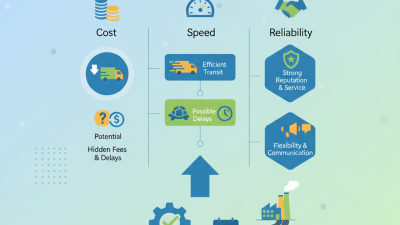
2026 How to Choose the Best LTL Truck Freight Options for Your Business?
-

Top 10 LTL Truck Freight Tips for Global Buyers?
-

Best Less Than Truckload Freight Solutions for Your Business?
-

Top 10 LTL Loads for Global Buyers