How to Choose the Right Shipping Container in 2026?

Choosing the right shipping container in 2026 starts with the cargo, not the price tag. Will it hold dry goods, chilled produce, or unusually tall equipment? A standard 20-foot container suits dense, compact loads; a 40-foot unit offers more floor space. But usable capacity also depends on cargo weight, loading method, and handling equipment. Measure the largest item, including its packaging. Small oversights matter.

The market context is significant. UNCTAD’s Review of Maritime Transport 2024 reported that global maritime trade grew by 2.4% in 2023 and projected growth of 2.0% in 2024. Those figures describe seaborne trade, not container availability or current prices. Still, they show why route, schedule, and equipment type deserve attention. Before choosing, compare container condition, door opening dimensions, ventilation needs, and the carrier’s stated weight limits. For temperature-sensitive cargo, confirm the required operating range and power arrangements rather than relying on a label alone.

Shipping analyst Jan Hoffmann’s work at UNCTAD highlights how closely maritime transport connects to global trade. A practical takeaway for container buyers is: “Match the container to the cargo, route, and handling plan—not price alone.” This is an editorial summary, not a verbatim quotation. It sounds obvious. In practice, rushed decisions can miss a vital detail: a pallet may fit the floor yet block the doors. This guide will help you compare container sizes, types, condition, and costs, while identifying the questions worth asking before booking.

How to Choose the Right Shipping Container in 2026?

Define Cargo Volume Using ISO Sizes: 20-Foot Holds 33 m³, 40-Foot 67 m³

A container’s stated capacity is a useful starting point, not a loading guarantee. Under ISO 668 size standards, a typical 20-foot dry container offers about 33 m³ of internal volume, while a 40-foot unit provides about 67 m³. These are approximate figures; internal dimensions vary slightly by container design and condition. Check the actual unit’s specifications before planning a close fit.

Volume alone can mislead. A 20-foot container may suit dense cargo that reaches its weight limit before filling the space; a 40-foot container offers nearly twice the volume, but not twice the payload. The World Shipping Council’s industry guidance notes that container payload depends on the container’s maximum gross mass and tare weight. Measure cartons, pallets, and handling gaps, then compare the total with the container’s payload rating. A spreadsheet can still fool you. Boxes rarely pack like perfect cubes, and cargo may shift during transit. UNCTAD’s Review of Maritime Transport 2024 describes shipping as central to global trade, making accurate space planning more than a warehouse detail. Leave room for safe loading and securement. A little empty space may be the smarter choice.

How to Choose the Right Shipping Container in 2026?

Compare approximate cargo volume by standard ISO container size.

A 20-foot container holds approximately 33 m³, while a 40-foot container holds approximately 67 m³. These are approximate internal capacities; usable space can vary by container design and cargo loading requirements.

Check Weight Limits: ISO Containers Reach 30,480 kg Maximum Gross Mass

When choosing a shipping container, check its maximum gross mass before estimating how much cargo it can carry. Many standard ISO containers are rated up to 30,480 kg, including the container itself. That figure is not the permitted cargo weight. A container’s tare weight must be subtracted to find its payload capacity. For example, if the tare weight is 2,300 kg, the theoretical payload is 28,180 kg.

Check the rating plate on the container, since specifications can differ by type and condition. The door marking is useful, but faded or damaged details deserve a closer look. Ask the supplier to confirm the container’s current rating and tare weight. Then compare your cargo’s measured weight with the payload limit, leaving room for packaging and securing materials. Small details matter.

Weight distribution matters too. A load concentrated at one end can create handling problems, even when the total weight stays below the limit. Keep heavy items low and spread them across the floor where practical. Also confirm any transport or lifting limits that apply to your planned route; the container’s rating alone does not settle every handling question. A quick calculation can still be wrong if the cargo estimate is rough. Recheck it before loading.

Select Container Type: Dry, High-Cube, Open-Top, Flat-Rack, or Reefer

Choosing the right container starts with the cargo’s dimensions, weight, and handling needs. A standard dry container suits boxed goods, furniture, and palletized loads that need weather protection. Measure the cargo and allow room for safe loading.

Start with dimensions. A high-cube container adds roughly one foot of interior height, which can help with tall cartons or light, bulky items. Extra space is useful, but it does not increase the container’s weight limit.

Open-top containers allow loading from above, making them practical for tall machinery or cargo handled by crane. A removable cover can protect goods from rain, though it may not provide the same seal as a solid roof.

Flat-rack containers have foldable end walls and suit oversized loads such as industrial equipment. Check securing points and loading plans carefully; cargo that fits on a rack may still exceed its permitted dimensions or weight.

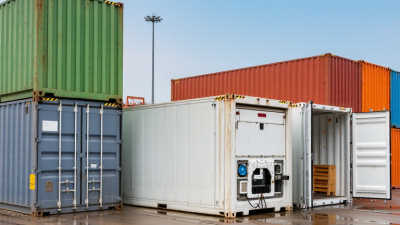
Reefer containers control temperature for goods that need chilled or frozen conditions. Confirm the required temperature range, ventilation settings, and power availability along the route.

Not always simple.

A reefer maintains conditions, but it cannot quickly correct cargo that was loaded at the wrong temperature. Inspect seals, doors, and equipment before use, and verify that the chosen container’s usable dimensions match the actual load.

Assess Condition Through CSC Plates, Watertightness, and Structural Integrity

How to Choose the Right Shipping Container in 2026?

A container’s paint can look fine while its frame hides damage. Start with the CSC plate, which records inspection details and the date of the next examination. Check that the plate is legible and current for the container’s intended use. A plate alone does not confirm good condition, though. Ask for inspection records, and compare the container’s identifying number with its paperwork.

Check for water, too. Close the doors and look for daylight around the seals; inspect the floor for damp patches, musty smells, or fresh stains. Small leaks can ruin stored goods before anyone notices. Then examine the structure: look for bent corner posts, cracked welds, loose door hinges, and deep corrosion, especially beneath the floor and along the bottom rails. Some dents are cosmetic. It can be hard to tell at a glance.

Tips: Visit in daylight, bring a flashlight, and open and close both doors. Photograph defects before purchase or rental. If the container will carry cargo, ask a qualified inspector to assess questionable damage and confirm its suitability. Don’t rely on a quick walk-around. A rushed check can miss the detail that matters.

Verify SOLAS VGM, ISO 1496 Compliance, Delivery Costs, and 2026 Availability

How to Choose the Right Shipping Container in 2026?

A suitable container must pass more than a visual check. Under the IMO’s SOLAS rules, the shipper must provide a verified gross mass (VGM) before a packed container is loaded. Confirm who will weigh it, how the result will be documented, and whether the local terminal accepts the method. A missing or late VGM can disrupt a booking. Small paperwork errors matter.

Check the container’s type and condition against the relevant ISO 1496 requirements, which cover dimensions, strength, and testing. Ask for inspection records, then examine door seals, floorboards, corner castings, and any visible repairs. UNCTAD’s Review of Maritime Transport 2024 reported that global container-port throughput reached about 858.9 million TEUs in 2023. That scale does not guarantee a box will be available near your site. Request written confirmation of the unit’s location and release date. Compare delivery, chassis, waiting-time, and repositioning charges—not just the quoted container price. Get the full cost in writing. Availability can change quickly, and I would still leave room for a delay.

How to Choose the Right Shipping Container in 2026? — Verify SOLAS VGM, ISO 1496 Compliance, Delivery Costs, and 2026 Availability
Container Type Typical Nominal External Size (L × W × H) Typical Internal Capacity Best Suited For ISO 1496 / SOLAS Checks Delivery Cost Considerations 2026 Availability Check
20 ft General Purpose 6.06 × 2.44 × 2.59 m About 33 m³; internal dimensions and payload vary by unit. Dense or heavy cargo that fits within a shorter container; suitable where site access or handling space is limited. Request the container’s CSC safety approval plate and inspect its condition. Confirm the applicable ISO 1496-1 requirements. The shipper must provide verified gross mass (VGM) under SOLAS before vessel loading. Compare the unit price with haulage, chassis, lift-on/lift-off, waiting time, permits, and empty-return charges. Weight limits on roads may constrain heavy loads. Check live stock for the required port or depot, grade, and delivery date. Availability is location- and equipment-dependent.
40 ft General Purpose 12.19 × 2.44 × 2.59 m About 67 m³; internal dimensions and payload vary by unit. High-volume, non-temperature-controlled cargo that does not require extra internal height. Check the CSC plate, structural condition, and ISO 1496-1 suitability. Calculate and submit VGM for the packed container using an accepted method. May offer more volume per unit than a 20 ft container, but inland delivery, site access, and payload restrictions can affect total cost. Confirm the exact equipment type and release date with the local depot; do not assume a quoted listing guarantees allocation.
40 ft High Cube 12.19 × 2.44 × 2.90 m About 76 m³; approximately 30 cm more external height than a standard-height unit. Bulky, light cargo that benefits from extra vertical space. Verify the unit’s dimensions, CSC plate, and ISO 1496-1 suitability. VGM includes the container’s tare mass plus cargo, packaging, and securing materials. Check height clearances on the delivery route, under bridges, and at the receiving site. Special routing or permits may add cost. High-cube stock can differ from standard-height stock by depot. Confirm availability and delivery lead time for the required condition.
20 ft Refrigerated About 6.06 × 2.44 × 2.59 m Typically less usable internal volume than a general-purpose container because of insulation and refrigeration equipment. Temperature-controlled cargo requiring a compatible reefer unit and operating plan. In addition to CSC and applicable ISO 1496 checks, verify the refrigeration unit’s operating condition, temperature range, power requirements, and recent test records. VGM still applies. Include power supply or generator costs, pre-trip inspection, monitoring, fuel, and specialist handling in the delivered-cost estimate. Confirm that the requested temperature range, power equipment, and service support are available at both origin and destination.
40 ft Refrigerated About 12.19 × 2.44 × 2.90 m Usable capacity depends on insulation, machinery, airflow design, and loading plan. Larger temperature-controlled shipments with appropriate power access and reefer handling facilities. Check CSC approval, applicable ISO 1496 requirements, reefer operating records, and cargo airflow needs. Obtain and submit an accurate SOLAS VGM. Account for electricity or generator supply, temperature monitoring, specialized trucking, and potential waiting or plug-in charges. Verify reefer-specific stock and equipment condition directly with the local provider; general-purpose availability is not a substitute.
20 ft Open Top About 6.06 × 2.44 × 2.59 m Capacity depends on roof-bow arrangement, cover, and cargo loading method. Oversized or top-loaded cargo that cannot be conveniently loaded through standard end doors. Confirm the unit is suitable for the cargo and lifting method, inspect its CSC plate and structure, and check applicable ISO 1496 requirements. VGM includes all cargo and securing materials. Budget for crane or top-loading equipment, tarpaulin handling, special securing, and any oversize-cargo transport requirements. Ask specifically for open-top equipment and compatible lifting arrangements; availability is often more location-specific than standard dry equipment.
20 ft Flat Rack About 6.06 m long; width and end-wall configuration vary by design. No enclosed internal volume; usable deck and payload are unit-specific. Heavy, wide, or awkward cargo that needs open sides or specialized lashing. Check the CSC plate, rated payload, lashing points, and applicable ISO 1496 requirements for the specific unit. Confirm cargo securing and VGM arrangements before shipment. Include lifting, lashing, special chassis, out-of-gauge handling, route permits, and possible port surcharges. Confirm the exact flat-rack configuration, payload rating, and handling capability at each terminal before booking.
Selection and verification note: Dimensions and capacity figures are typical nominal or approximate values, not guaranteed specifications. Actual tare mass, payload, internal dimensions, condition, and equipment features differ between units. Check the individual unit’s data plate and current carrier or depot documentation. ISO 1496 is a series of specifications covering freight-container testing and performance; the applicable part depends on container type. SOLAS VGM is the verified gross mass of the packed container and is a shipper’s pre-loading requirement, not a container certification. Delivery costs and 2026 availability must be confirmed for the specific route, date, equipment condition, and destination.