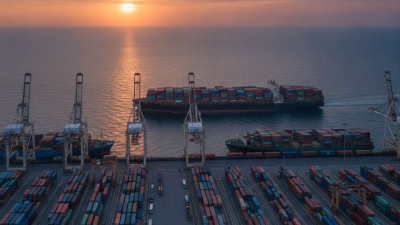
China Top 10 Sea Container Manufacturers to Buy From

Choosing the right sea container manufacturer affects cargo safety, operating costs, and long-term reliability. A container may look simple, but its steel grade, welding quality, floor treatment, door seals, and corrosion protection matter greatly. Small production details can create expensive problems later.

Marc Levinson, an economic historian and author of The Box, wrote, “The container made the growth of world trade possible.” His observation still explains the industry’s importance. Modern manufacturers must support global logistics with consistent dimensions, dependable materials, and disciplined quality control. This guide examines ten leading sea container manufacturers and the practical reasons buyers may consider them.

The comparison focuses on real purchasing concerns. These include manufacturing experience, container specifications, customization options, inspection procedures, certifications, delivery capability, and after-sales support. Readers should check factory records, request current technical documents, and confirm loading requirements before placing an order. A low quotation is not always a low final cost.

Some manufacturers excel at standard dry containers. Others perform better with refrigerated, open-top, side-opening, or specialized units. The differences can be easy to miss. That is where careful evaluation matters. No manufacturer is perfect, and supplier information can change over time. Buyers should verify every important claim independently.

The goal is practical guidance, not a simple ranking. Each company deserves attention for specific strengths and possible limitations. With the right questions, buyers can select a sea container supplier that matches their cargo, route, budget, and compliance needs.
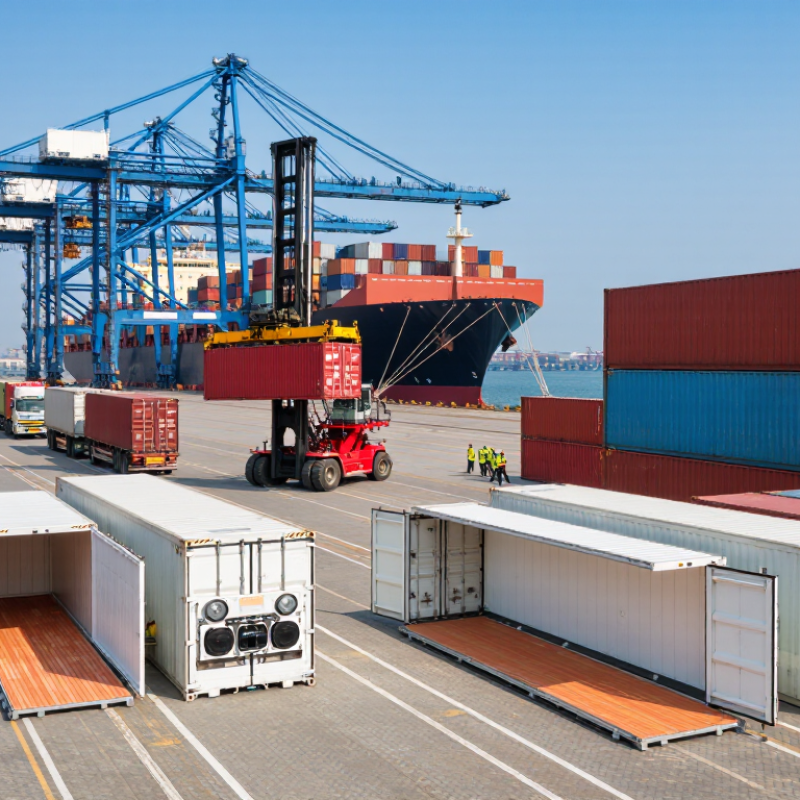
China Top 10 Sea Container Manufacturers to Buy From

China’s Sea Container Manufacturing Industry and Global Market Role

China’s Sea Container Manufacturing Industry and Global Market Role

China remains the center of global sea container production. Industry estimates from the China Container Industry Association place Chinese factories at over 95% of global dry-container output. UNCTAD’s Review of Maritime Transport 2024 reported a worldwide container fleet of roughly 30.5 million TEU at the beginning of 2024. This scale supports faster replacement, competitive pricing, and broad export capacity. Yet volume alone is not enough. A factory may produce thousands of units while missing small details, such as uneven welds or weak door seals.

For buyers comparing China’s top ten sea container manufacturers, technical evidence matters more than online rankings. Check CSC compliance, ISO 9001 procedures, steel certificates, coating thickness, and water-leak test records. Factory audits should review welding stations, paint rooms, storage yards, and correction logs. The UNCTAD report also noted continuing pressure on shipping networks from vessel growth and route disruption. Reliable container supply therefore affects both freight planning and equipment costs. The market is strong, but quality consistency can still vary between production lines.

Tips: Request a sample inspection before signing a large order. Confirm dimensions, corner fittings, floor loading, and delivery terms in writing. Ask for recent third-party test reports, not only factory photographs. A low quote may look attractive, but replacement costs can quietly erase the saving. Good purchasing needs patience. Metrics matter more than promises.

Key Criteria for Evaluating Chinese Sea Container Manufacturers

When evaluating Chinese sea container manufacturers, begin with production evidence, not polished catalog photos. A serious factory should show its welding lines, coating rooms, testing areas, and finished-container inspections. Ask for recent project records, production capacity, and clear delivery timelines. Factory visits can reveal more than sales presentations. Look for organized steel storage, calibrated equipment, and workers following documented procedures.

Technical compliance deserves close attention. Confirm that containers meet applicable ISO 1496 requirements and carry valid CSC safety approval for international transport. Review steel grades, weld quality, floor load ratings, door sealing, corner fitting strength, and paint thickness. Request material certificates and serial-number traceability. Independent inspection before shipment adds useful protection. Small details matter, such as uneven door gaps or water collecting near the roof seams.

Price comparisons should include more than the factory quotation. Check mold charges, packaging, inland transport, inspection costs, spare parts, and warranty terms. A low offer may hide thinner materials or weaker corrosion protection. That risk is easy to underestimate. Communication quality also matters; delayed answers often become delayed production. No manufacturer is perfect, and even a well-managed factory may miss a deadline during peak seasons. Build realistic buffer time, record every specification, and test a sample unit before placing a large order. Reflect on what the documents do not prove. That gap often deserves more attention than the advertised price.

China Top 10 Sea Container Manufacturers to Buy From - Key Criteria for Evaluating Chinese Sea Container Manufacturers
No. Evaluation Criterion Recommended Benchmark Evidence to Request from the Manufacturer Importance
01 CSC Safety Approval Every international freight container should have a valid CSC Safety Approval Plate issued under the International Convention for Safe Containers. A sample CSC plate, approval number, inspection records, and confirmation that the approval applies to the proposed container design. Critical
02 Dimensional Compliance The container should comply with applicable ISO freight-container dimensions, including ISO 668 for classification, dimensions, and ratings. Approved engineering drawings showing external dimensions, internal dimensions, door opening, corner fitting positions, and rated capacity. Critical
03 Structural Strength The design should satisfy applicable ISO 1496-1 performance requirements for general-purpose freight containers. Structural calculation reports, test records for lifting and stacking, floor-load specifications, and welding inspection results. Critical
04 Corner Fittings and Interchangeability Corner fittings should follow ISO 1161 requirements so that containers can be safely lifted, stacked, and secured with standard handling equipment. Corner-fitting material certificates, dimensional inspection reports, welding procedures, and third-party test documentation. Critical
05 Steel and Material Quality Corten or equivalent weather-resistant steel should be used where specified, with traceable material quality and corrosion-resistant construction. Mill certificates, material grades, coating specifications, steel-thickness records, and batch traceability documents. Critical
06 Coating and Corrosion Protection The coating system should be suitable for marine exposure, with documented surface preparation, primer, topcoat, and dry-film-thickness requirements. Paint-system technical data sheets, surface-preparation standard, coating inspection report, salt-spray or corrosion-test results where applicable. High
07 Floor Performance The floor should meet the buyer’s required payload, forklift axle-load, point-load, moisture-resistance, and pest-treatment specifications. Floor construction drawings, plywood or bamboo-board certificates, load-test results, timber-treatment documents, and repair instructions. High
08 Quality Management System A documented ISO 9001 quality-management system is a strong indicator of controlled production, inspection, corrective action, and traceability. Current ISO 9001 certificate, certification scope, internal inspection plan, nonconformity records, and production quality-control procedures. High
09 Production Capacity and Delivery Control The manufacturer should demonstrate sufficient welding, painting, assembly, inspection, and export-packaging capacity for the required order volume. Factory audit report, production-line photographs or video, monthly capacity statement, recent delivery references, and an agreed production schedule. High
10 Warranty and After-Sales Support The purchase contract should clearly define warranty duration, structural and leakage coverage, defect-response time, spare parts, and claim procedures. Signed warranty terms, inspection and acceptance procedure, spare-parts list, repair manual, service contacts, and documented claims process. High

Profiles of China’s Top 10 Sea Container Manufacturers

China Top 10 Sea Container Manufacturers to Buy From

Profiles of China’s Top 10 Sea Container Manufacturers

The ten leading Chinese manufacturers operate within a demanding, specification-driven market. UNCTAD’s Review of Maritime Transport 2024 reported roughly 8% annual growth in global container ship capacity by early 2024. That expansion increases demand for reliable dry, refrigerated, and specialized containers. The strongest factories combine automated cutting, certified steel, robotic welding, and controlled surface treatment. Production scale matters, but consistency matters more.

Several profiles stand out for their testing discipline. Their facilities commonly inspect weld penetration, door alignment, floor loading, and water resistance. ISO 1496 requires freight containers to withstand defined stacking, lifting, and load tests. ISO 668 also controls external dimensions and compatibility. Buyers should request recent test records, material certificates, and inspection photographs. Paperwork alone is not enough.

The better manufacturers support private-label production, fleet color matching, replacement parts, and export documentation. Some maintain separate lines for standard 20-foot and 40-foot units, while others handle refrigerated equipment with stricter insulation controls. Quality can still vary between production batches. This is where buyers need caution. A low quotation may reflect thinner coatings, weaker flooring, or limited after-sales support. Independent pre-shipment inspection remains sensible, even when a factory appears highly experienced.

Container Types, Customization Options, and Quality Standards

Choosing among China’s top sea container manufacturers requires more than comparing prices. Start with the container type. Standard dry containers suit general cargo, while refrigerated units need stable temperature control and reliable insulation. Open-top containers help load tall machinery. Flat racks support oversized equipment, but their corner posts and locking points require careful inspection.

Customization can include door placement, ventilation openings, flooring, internal partitions, paint systems, and special dimensions. In practice, small details matter. A poorly fitted door gasket can admit water during heavy rain. Uneven flooring may damage palletized goods. Ask for material specifications, welding procedures, coating thickness, and production drawings before approval. I have found that clear drawings prevent more problems than attractive sales promises.

Tips: Request sample inspection records and recent factory test reports. Check weld seams, corner castings, locking bars, hinges, and rubber seals. Quality should be verified against applicable CSC requirements and documented manufacturing controls, such as ISO 9001 systems. For refrigerated containers, review temperature uniformity, insulation performance, and power testing. Independent inspection is useful, although it cannot replace daily factory discipline. A perfect specification rarely exists. Leave room for practical corrections after a trial unit.

How to Select and Purchase Containers from Chinese Manufacturers

Buying sea containers from Chinese manufacturers starts with a precise operating plan. Define cargo type, route, loading frequency, and required service life. A dry container may suit boxed goods, while refrigerated cargo needs validated temperature control. Measure available yard space before choosing 20-foot, 40-foot, or high-cube units. Small errors become expensive quickly. Ask each supplier for drawings, material grades, door details, floor treatment, and wind-and-water resistance data. Request photographs of current production, not only polished catalog images.

Evaluate the factory, not just the trading quotation. Check its registration, export experience, quality system, and ability to provide traceable inspection records. Independent pre-shipment inspection can verify dimensions, weld quality, coating thickness, door seals, and container identification plates. Confirm applicable international standards and destination-port requirements with your carrier or surveyor. A low price may hide weaker flooring, delayed documentation, or costly inland transport. Compare total landed cost, including tooling, testing, insurance, freight, duties, and after-sales support.

Use a written specification and staged payment schedule. Set acceptance criteria for dents, corrosion, paint finish, moisture, and spare parts. Approve a sample unit before mass production when the order is large. Check serial numbers and shipping documents before loading. Keep communication in clear, dated records. I would not trust a promise that “everything is standard”; standards differ by route and cargo. One practical lesson is uncomfortable: the cheapest container can demand the most attention later. Leave time for corrections, because production schedules sometimes move slower than expected.